
The 2026 Hybrid Workstation: Building "Dirty Snow" (Ryzen 9800X3D + Linux)
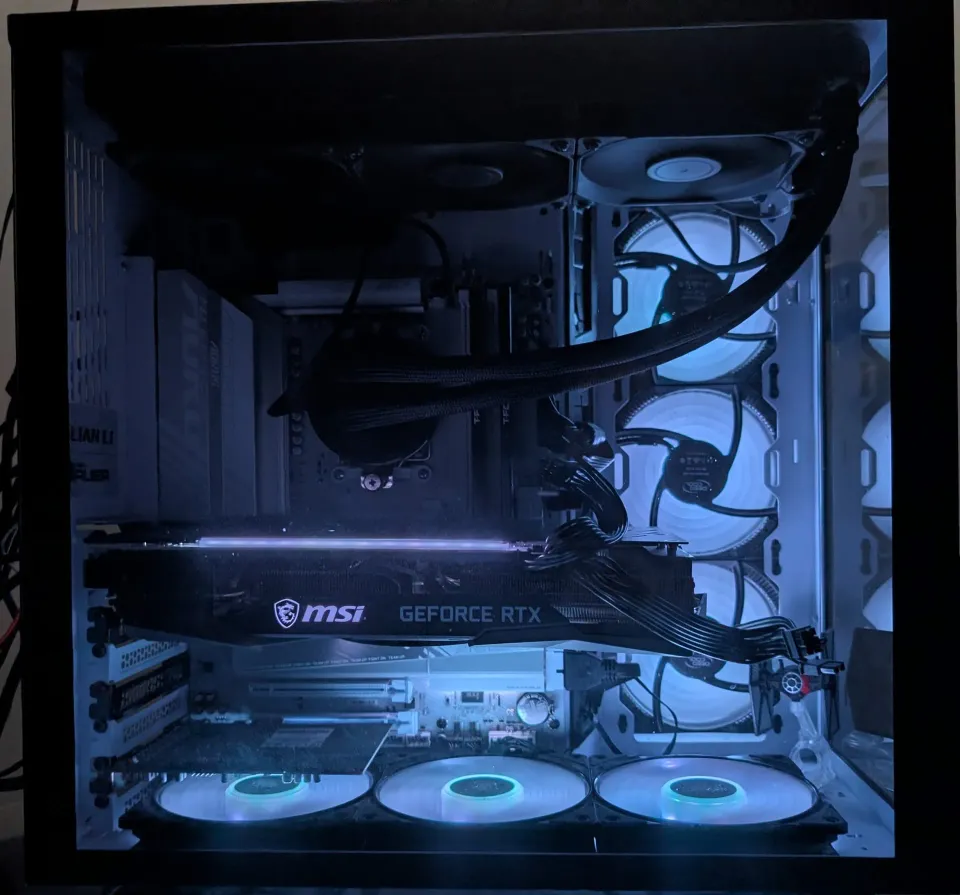
For years, I kept my digital life separated. I had a Server for homelab stuff, and a dedicated Gaming PC running Windows. But with the release of the AMD Ryzen 7 9800X3D, that line has blurred.
We finally have a CPU that is objectively the fastest gaming chip on the planet, yet efficient enough to handle virtualization and workstation tasks without breaking a sweat.
So, I did something drastic.
I hadn't even planned it. The 9800X3D dropped in late 2024, and I told myself I didn't need it. But then Black Friday 2025 happened. In the back of my mind, the looming market disaster for DDR5 and DRAM in general...
I agreed to drive a buddy down to our local Canada Computers so he could scoop up an RTX 5070 Ti. It was supposed to be a quick lunch run. We walked in, and there it was: The "Door Crasher" poster... A CPU, motherboard, and RAM combo for $1,199 CAD. I stood, motionless, trying to avert my eyes but they read "Ryzen 9800X3D" and I knew I was in trouble...
I blacked out for a second. When I woke up, I was loading boxes into the trunk.

Just like that, I retired my trusty Ryzen 5800X (my daily driver since 2021) and my older 3700X before that. I had already ditched Windows for Pop!_OS a year ago, which breathed new life into that aging system, but this? This was different.
I decided to build a single machine to rule every use case I have. I installed CachyOS (Arch Linux) and built the ultimate 2026 Hybrid Workstation.
I call it "Dirty Snow."
The Build: Why "Dirty Snow"?
I went for a high-contrast Black & White aesthetic. It’s not the sterile "all-white" Instagram look that is everywhere right now. It's a grittier, industrial mix of white PCB and black industrial components.
It fits the vibe perfectly—it looks exactly like the roads outside in Canada 🇨🇦 this time of year!
The Specs
- CPU: AMD Ryzen 7 9800X3D (The 8-Core / 16-Thread King)
- Cooler: Fractal Design 360mm AIO (Carried over from the old build)
- Motherboard: Gigabyte B850 Aorus Elite Wifi 7 ICE (The white backbone)
- RAM: 32GB DDR5-6000 T-Force Vulcan
- Storage 1: Samsung 990 EVO Plus (2TB) Gen 5 NVMe
- Storage 2: SABRENT Rocket (1TB) Gen 4 NVMe (From the old build)
- GPU: NVIDIA RTX 3070 Ti (Still a 1440p beast)

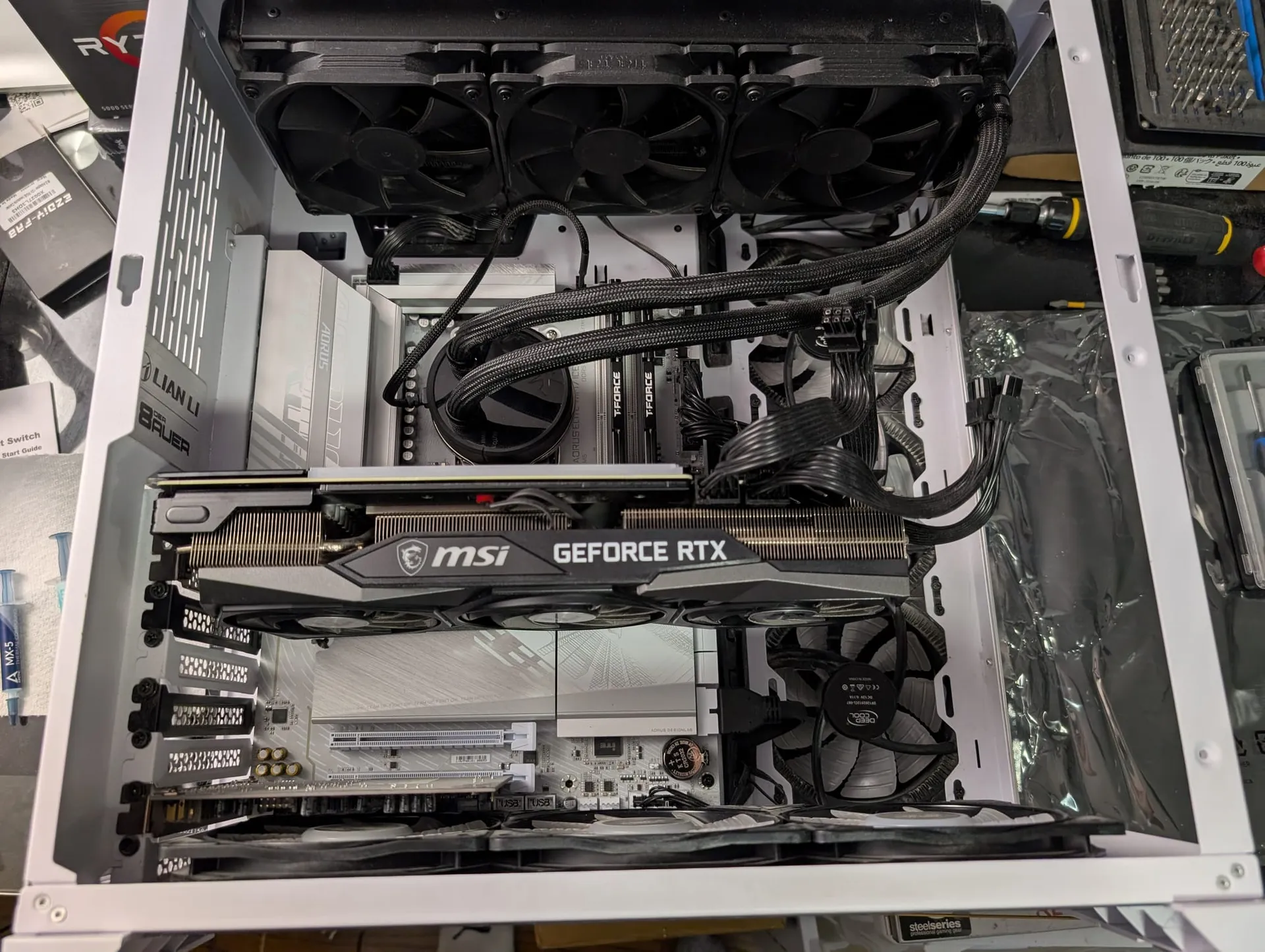
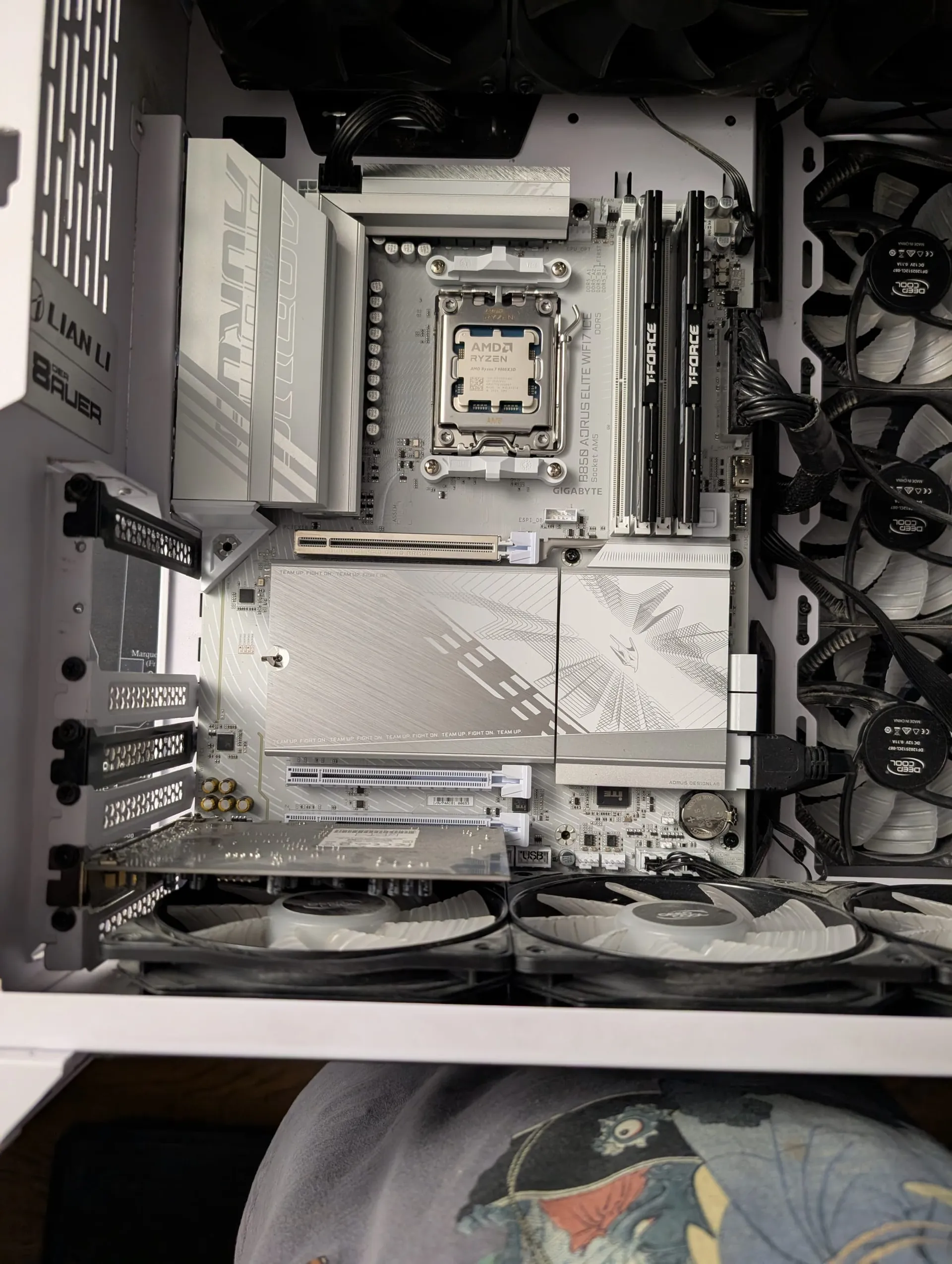

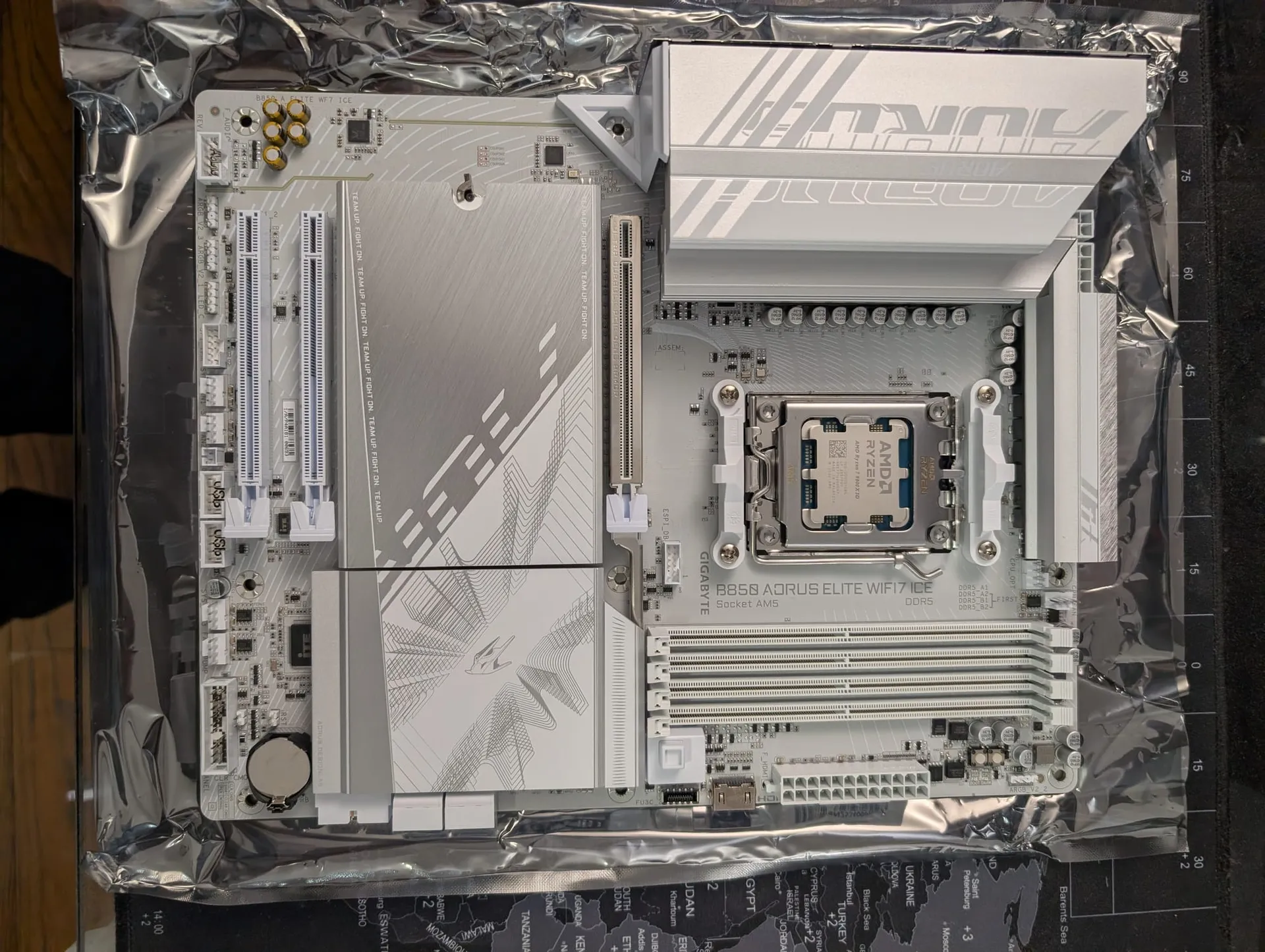
Dirty Snow build gallery!
The Upgrade: 5800X vs. 9800X3D
I came from a Ryzen 7 5800X on an MSI X570 Carbon Gaming Pro. That chip was a legend, but it ran hot. The 5800X was notorious for its thermal density—it would instantly spike to 80°C+ under load. My 360mm AIO kept it manageable (68°C-71°C), but the fans were always working.
The Surprise
With the exact same Fractal Design cooler, the 9800X3D runs cooler than the 5800X ever did.
- Idle: ~42°C (vs 50°C on the 5800X)
- Gaming Load: ~68°C (vs 75-80°C on the 5800X)
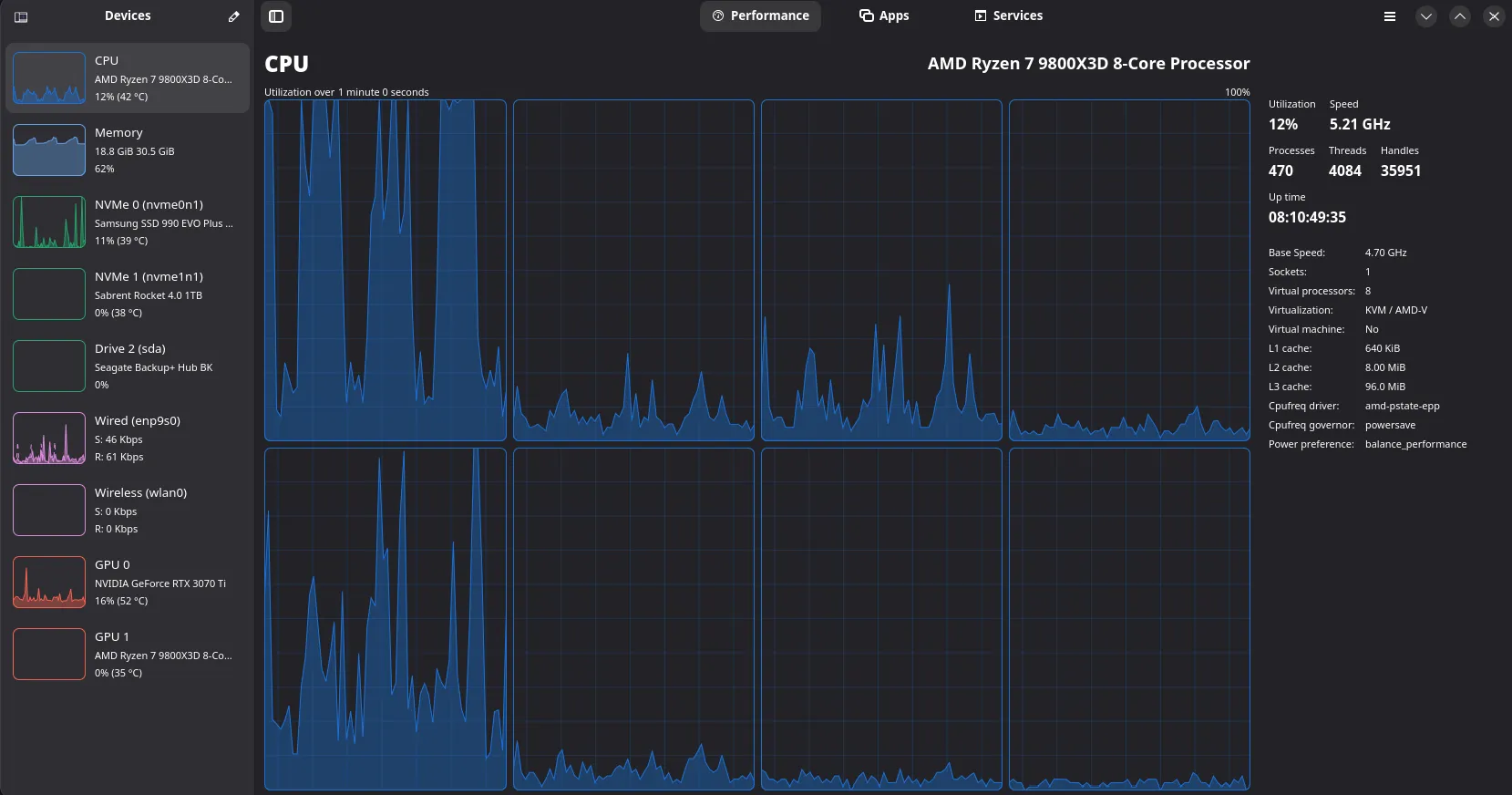
It defies physics. I nearly doubled my frame rates in CPU-bound games, yet the system is quieter and cooler. AMD’s efficiency with the 4nm process and inverted 3D V-Cache design is genuinely impressive.
The OS: Gaming on CachyOS
I didn't build this just to stare at benchmarks. Primarily, this is a Gaming Machine.
The 9800X3D relies on massive L3 cache (96MB) to feed the GPU. Windows 11 is "okay" at scheduling this, but CachyOS is surgical. The nerds developing Cachy created a specific optimized kernel specifically compiled for Ryzen 3D variants.
Using the BORE (Burst-Oriented Response Enhancer) Scheduler, CachyOS pins my games to the high-performance cores and shoves background tasks out of the way.
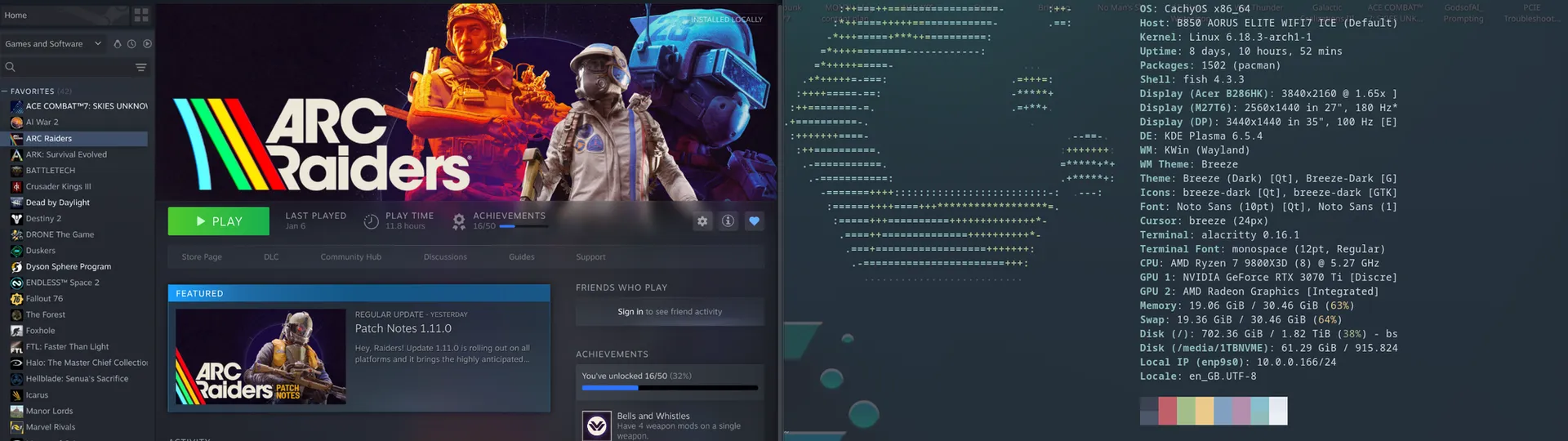
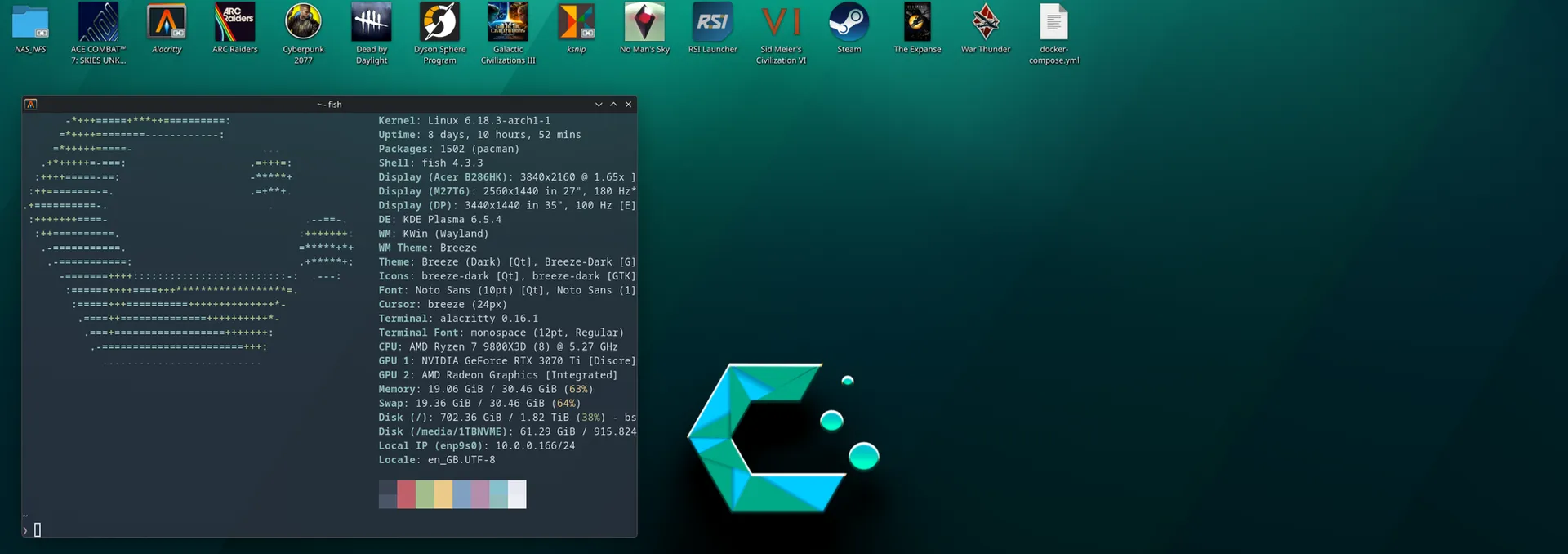
The result is frame-time consistency that feels like a console - flat, smooth, and stutter-free. I wish I could say my old 5800X was similar, but honestly? It barely holds a candle to this monster.
The "Snappiness" Factor: It’s Not Just Placebo
Coming from a Ryzen 5800X, I expected better gaming frame rates. What I didn't expect was for the entire Operating System to feel like it had its friction removed.
Technically, this is the result of three specific technologies working in harmony:
1. The "Backpack" Effect (3D V-Cache) Standard CPUs waste thousands of cycles waiting for data to arrive from system RAM. The 9800X3D carries a massive 96MB cache directly on the die. It effectively masks system latency because the data it needs is already there. In Linux, this manifests as instant window switching and zero-stutter multitasking.
2. The Infinity Fabric Sweet Spot By pairing this chip with DDR5-6000 CL30 RAM, I've hit the AM5 architecture's "Golden Ratio." This locks the memory controller frequency to the RAM frequency (1:1 mode).
- Old System (DDR4): Like a two-lane road with a 100km/h speed limit.
- New System (DDR5): Like a twelve-lane highway with the same 100km/h speed limit.
The traffic moves at the same speed (latency), but you can move vastly more cargo (bandwidth) at once.
3. The I/O Harmony When you combine the CachyOS BORE Scheduler (which prioritizes interactive tasks) with the massive bandwidth of DDR5 and the cache-heavy CPU, you eliminate the bottlenecks that cause desktop "hitching." The machine doesn't just run faster; it feels connected.
To prep & optimize your new CachyOS install for gaming, hit the link for my dedicated guide and learn about tweaks and Hydra Game Launcher!
The Workstation: Linux & Virtualization
When I'm not gaming, "Dirty Snow" serves as my primary blog workstation and first-stage test lab.
I'm not a Proxmox fanboy and won't run a full Hypervisor on this metal (I have a server for that), but having 16 fast threads and 32GB of DDR5 means I can spin up local VMs instantly using KVM or VirtualBox.
Recent Test Case: Headscale
I recently needed to test Tailscale connectivity with my self-hosted Headscale controller (running on a VPS). As a long-time user of Wireguard (via OPNsense), I was curious what all the rage was about.
Instead of messing with my production network, I spun up a Debian VM locally on this rig.
I was able to simulate a remote client, enroll it in my Headscale network, and debug the ACLs—all while having a YouTube video playing on the second monitor and a dozen browser tabs open, without a single dropped frame. Now I could do this on my old warhorse 5800X, but nowhere near as quickly and fluidly.
This is the power of the 9800X3D. It allows me to prototype complex homelab setups in a sandbox environment before I break anything real.
Final Verdict
The Ryzen 9800X3D is not just for gamers. When paired with Linux, it becomes the ultimate "Have your cake and eat it too" processor. It crushes code compilation, melts through virtualization labs, runs surprisingly cool, and delivers the best gaming performance on the market.
Dirty Snow is open for business.




Member discussion