Core Lab Tech's Self-Hosted Lab (My Digital Fortress, 2026)
As an IT professional, I’ve been fascinated by the idea of having a self-hosted digital environment. The thought of controlling my own data, experimenting with different technologies, and having a backup of everything was incredibly appealing. It began in 2011/2012, with a little known project called “XBMC”. Not long after, I discovered Plex Media Server... Things quickly got ah, out of hand!
This post is part of my Custom NAS/Server Series:
Custom NAS & Servers
What is a Homelab?
Simply put, a homelab is a personal computing environment built within your home. It’s often used for experimentation & learning, hosting services, and, for some, a personal backup solution. My goal with this setup is to learn about server administration, networking, and various open-source technologies, all while having a fun and saving money!
I'll explain my setup in reverse chronological order fellow chrononaughts, so those who just want to see what I've got now, get that out of the way. You can read a lot more about homelab/selfhosting here.
My Full Tech Stack
What powers my smart home & keeps it connected.
Logical diagram first. Some of the items are clickable! Apologies but you'll need full-screen to view this properly.
flowchart TB
%% EDGE
A[🌍 Internet]
B[☁️ Cloudflare Edge]
%% FIREWALL
C[🛡️ OPNsense Firewall]
%% SWITCHING
D[🔀 UniFi Core Switch]
%% SECURITY LAYER
E[🌐 SWAG Reverse Proxy]
F[🔐 Authelia SSO]
%% DOCKER HOST
G[🐳 Docker Host]
%% APPLICATIONS
H[📸 Immich]
I[📄 Paperless-NGX]
J[⚙️ n8n Automation]
K[🏠 Home Assistant]
%% MEDIA
L[🎬 Jellyfin]
M[🎞️ Plex]
%% INFRASTRUCTURE
N[🧠 AdGuard DNS]
O[⏱ Local NTP]
P[📷 Frigate NVR]
%% EDGE FLOW
A --> B --> C --> D
%% APP INGRESS
C -->|HTTPS| E
E --> F --> G
%% MEDIA BYPASS (still via proxy)
C -->|Direct Media Port| E
E --> L
%% DOCKER SERVICES
G --> H
G --> I
G --> J
G --> K
G --> P
G --> M
%% INFRA ENFORCEMENT
C -->|Forced DNS| N
C -->|Forced NTP| O
%% VLAN GROUPS
subgraph VLAN7["VLAN 10 — Home Infrastructure"]
N
O
end
subgraph VLAN8["VLAN 20 — Docker Services"]
G
H
I
J
K
P
end
subgraph VLAN42["VLAN 50 — Media"]
L
M
end
%% STYLING
classDef edge fill:#000000,stroke:#00ff88,color:#00ff88,stroke-width:2px
classDef firewall fill:#001a12,stroke:#00ff88,color:#00ff88,stroke-width:3px
classDef proxy fill:#002b22,stroke:#00ffaa,color:#00ffaa
classDef docker fill:#001f1a,stroke:#00dddd,color:#00dddd
classDef infra fill:#001a1a,stroke:#00bbff,color:#00bbff
class A,B edge
class C firewall
class E,F proxy
class G,H,I,J,K,L,M,P docker
class N,O infra
%% CLICKABLE LINKS
click C "https://corelab.tech/opnsensept1/" "OPNsense Firewall Guides"
click E "https://corelab.tech/swag-reverse-proxy-guide/" "SWAG Reverse Proxy"
click F "https://corelab.tech/digital-castle-swag-crowdsec-authelia/#part-5-autheliacentralized-multi-factor-authentication-authorization" "Authelia Authentication"
click L "https://corelab.tech/jellyfin-guide-https/" "Jellyfin Securely"
click M "https://corelab.tech/best-plex-server-hardware/" "Plex Server Hardware Guide"
click N "https://corelab.tech/tag/dns/" "DNS Guides"
click P "https://corelab.tech/setupfrigate/" "Frigate NVR Setup"
- 1X Custom Server/NAS combo (Tower, not rack-mount, purely due to space)
- 80TB usable
- 1X Synology NAS appliance (Used strictly as a NAS, no dockers/apps)
- 112TB usable
- 1X Repurposed (Free, hand-me-down) Alienware XS1R3 Computer
- Exclusively running OPNsense Firewall
- New CPU cooler, more ram, new HDD, upgraded NICs
- 2X Ubiquiti Switches (USW-16-PoE gen2, USW-24-G2)
- 3X Unifi APs (U6 LR, U6 Pro, U6 Lite)
- Unifi Network Controller via Docker app
- 2X Reolink 822A 4k PoE cameras
- 1X Reolink Doorbell Cam, wifi version
Simpler, physical connectivity diagram.
flowchart TD
    %% Core flow
    subgraph Internet_FW["🌐 Internet & Firewall"]
        I["🌐 Internet"] --> C["🛡️ OPNsense Firewall (Alienware XS1R3)"]
    end

    subgraph Switching["🔀 Core Switching"]
        C --> B["🔀 Binardat 10G SFP+ Switch"]
        B --> D1["📡 UniFi PoE Switch"]
        B --> D2["📡 UniFi Switch (Non-PoE)"]
    end

    subgraph Servers["💾 Servers & Storage"]
        D2 --> A["💾 Custom Server/NAS (80TB, Docker Host)"]
        D2 --> B2["🗄️ Synology NAS (112TB)"]
        A --> E{"⚙️ UniFi Network Controller (Docker)"}
    end

    subgraph WirelessIoT["📶 Wireless & IoT"]
        D1 --> F["📶 UniFi APs (U6 LR, Pro, Lite)"]
        D1 --> G["📷 Reolink Cameras (PoE)"]
        F --> H["🚪 Reolink Doorbell Cam (WiFi)"]
    end

    %% Styling (dark-mode friendly nodes)
    style I fill:#ffffff,stroke:#333,stroke-width:2px
    style C fill:#f88,stroke:#333,stroke-width:2px
    style B fill:#8f8,stroke:#333,stroke-width:2px
    style D1 fill:#bbb,stroke:#333,stroke-width:2px
    style D2 fill:#bbb,stroke:#333,stroke-width:2px
    style A fill:#d8b4fe,stroke:#333,stroke-width:2px
    style B2 fill:#93c5fd,stroke:#333,stroke-width:2px
    style E fill:#e5e7eb,stroke:#333,stroke-width:2px
    style F fill:#5eead4,stroke:#333,stroke-width:2px
    style G fill:#cbd5e1,stroke:#333,stroke-width:2px
    style H fill:#cbd5e1,stroke:#333,stroke-width:2px

    %% Subgraph styling (clean + dashed)
    style Internet_FW fill:transparent,stroke:#888,stroke-width:1px,stroke-dasharray: 4 4
    style Switching fill:transparent,stroke:#888,stroke-width:1px,stroke-dasharray: 4 4
    style Servers fill:transparent,stroke:#888,stroke-width:1px,stroke-dasharray: 4 4
    style WirelessIoT fill:transparent,stroke:#888,stroke-width:1px,stroke-dasharray: 4 4
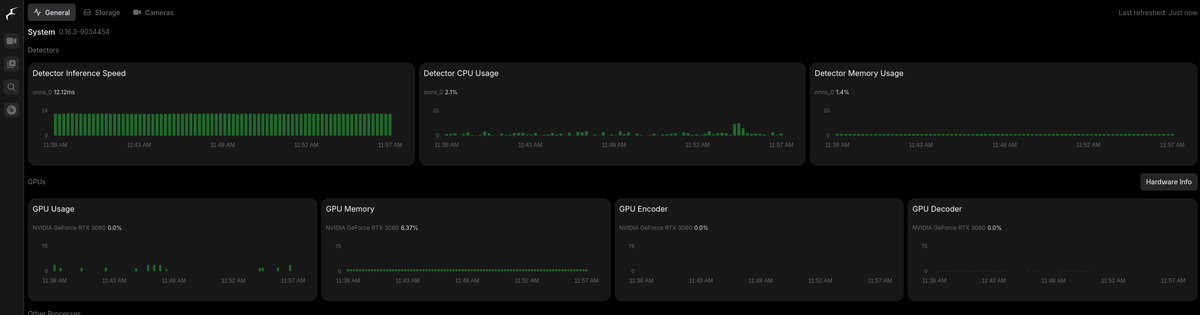
All of this provides me with 192+TB of redundant storage, 60+ dockers, webhosting needs, Plex for my house and NGFW protection!
Where to Begin Starting your Own Homelab?
- 1. The Mini-PC / SFF Route: This path starts with small, efficient PCs like Intel NUCs or BeeLinks, or the cheaper Minisforum PCs.
- Pros: Low power, quiet, small.
- Cons: Limited storage and PCIe slots.
- Recommendations: A GMKTek Mini-PC or a used Lenovo/Dell SFF PC is a perfect, low-cost way to start running Docker containers.
- 2. The Enterprise Rackmount Route: Used enterprise gear like Dell PowerEdge R720/R730s can be a perfect way to start, if you get them for the right price.
- Pros: Insane power for the price, tons of RAM and PCIe slots, built-in remote management (IPMI).
- Cons: Loud, power-hungry, heavy.
- Recommendation: You can find amazing deals on used Dell servers on eBay more than Amazon generally. You'll also need a good network rack and probably some quiet Noctua fans to replace the stock ones.
- You can also run a fairly quiet homelab!
- 3. The DIY NAS / All-in-One Tower:
- Pros: The "best of both worlds." Full control, high storage capacity, and quiet operation (if you build it right).
- This is the path I chose: It runs everything—NAS, containers, and Plex. I've written a complete step-by-step guide with my exact parts list to show you how to build one.
 Core Lab Joe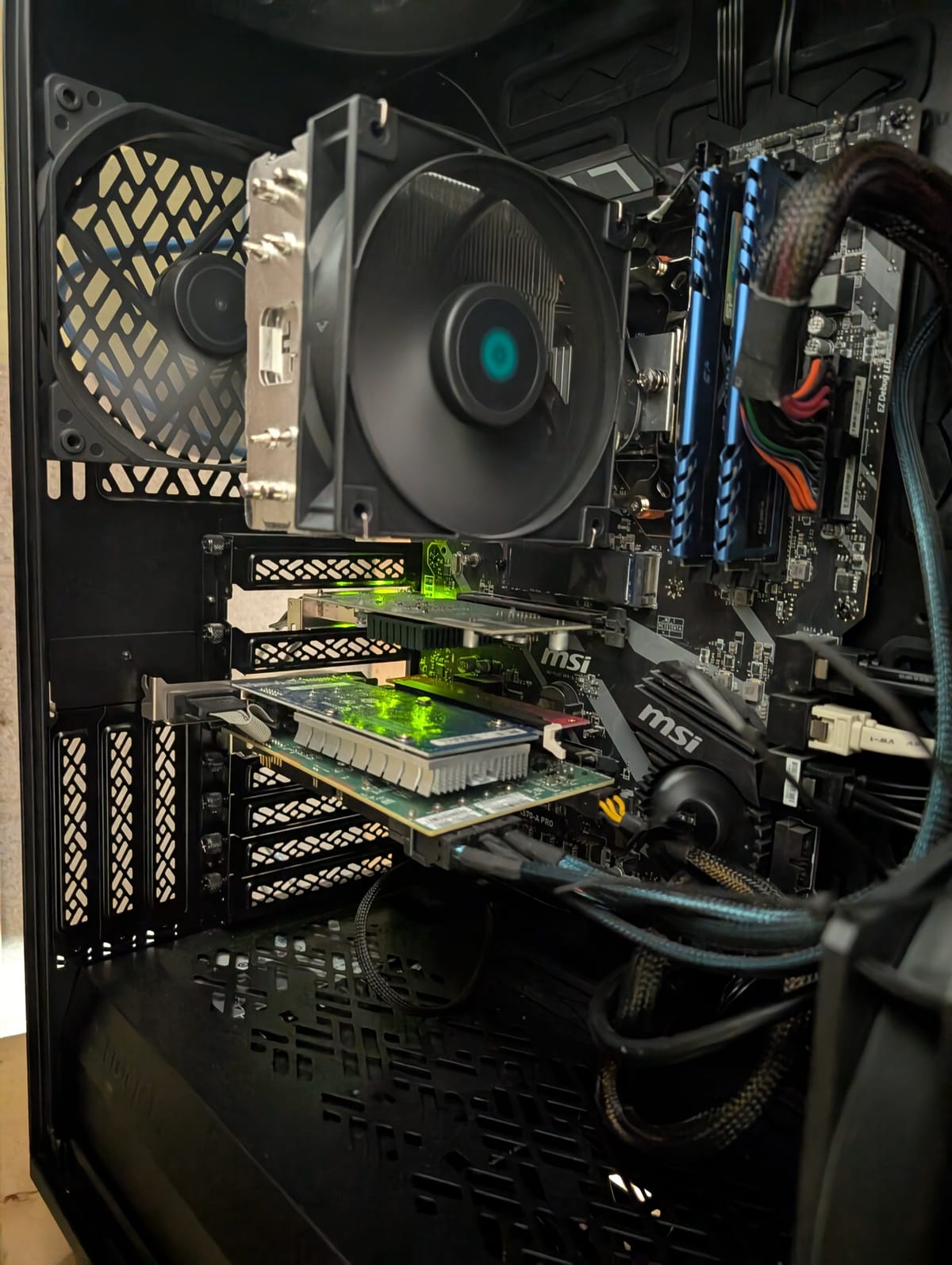
Operating System Choice
Debian, always Debian...
Operating system: Open Media Vault 8. OMV provides a slick and intuitive web-based GUI to manage your system primarily, as a NAS. However it has the capability to basically do anything you want in the computing world with omv-extras, their plugin environment. OS currently runs on a separate SATA SSD, not RAIDed...
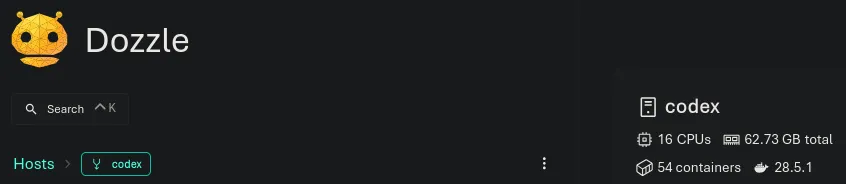
I've got 54 docker containers all running in a docker compose environment, beautifully humming along on this rig.
Key Details
Advanced OMV Details
OMV's built ontop of Debian 12, as such you can literally do almost everything and anything with it. OMV's shining quality (IMO) is it's flexibility. It sits on top of Debian and the largest 'change' they make to Debian that I struggled with, is the networking software. They use netplan vs traditional linux network stack and if/updown scripts.
Since it's Debian under the hood, I opted to install Docker Compose directly onto the OS vs using omv-extra's webgui compose.
OMV7 setup tutorial coming shortly!
Storage Tech: ZFS from omv-extras. 12X 6TB Enterprise SAS 3.5 disks setup as RAIDZ2 +5X8TB SATA 3.5" disks setup as RAIDZ1.
Peripherals: LSI Megaraid 9400-16i HBA (upgraded May 2026 from a 9300-16i), RTX 3060 12GB GPU, Dual 10GB SFP+ NIC, PCIE riser, 9?X 120mm cooling fans, a lot of fans...
🤿Deep Dives of Fav Containers/Apps Running in my Lab
 Core Lab Joe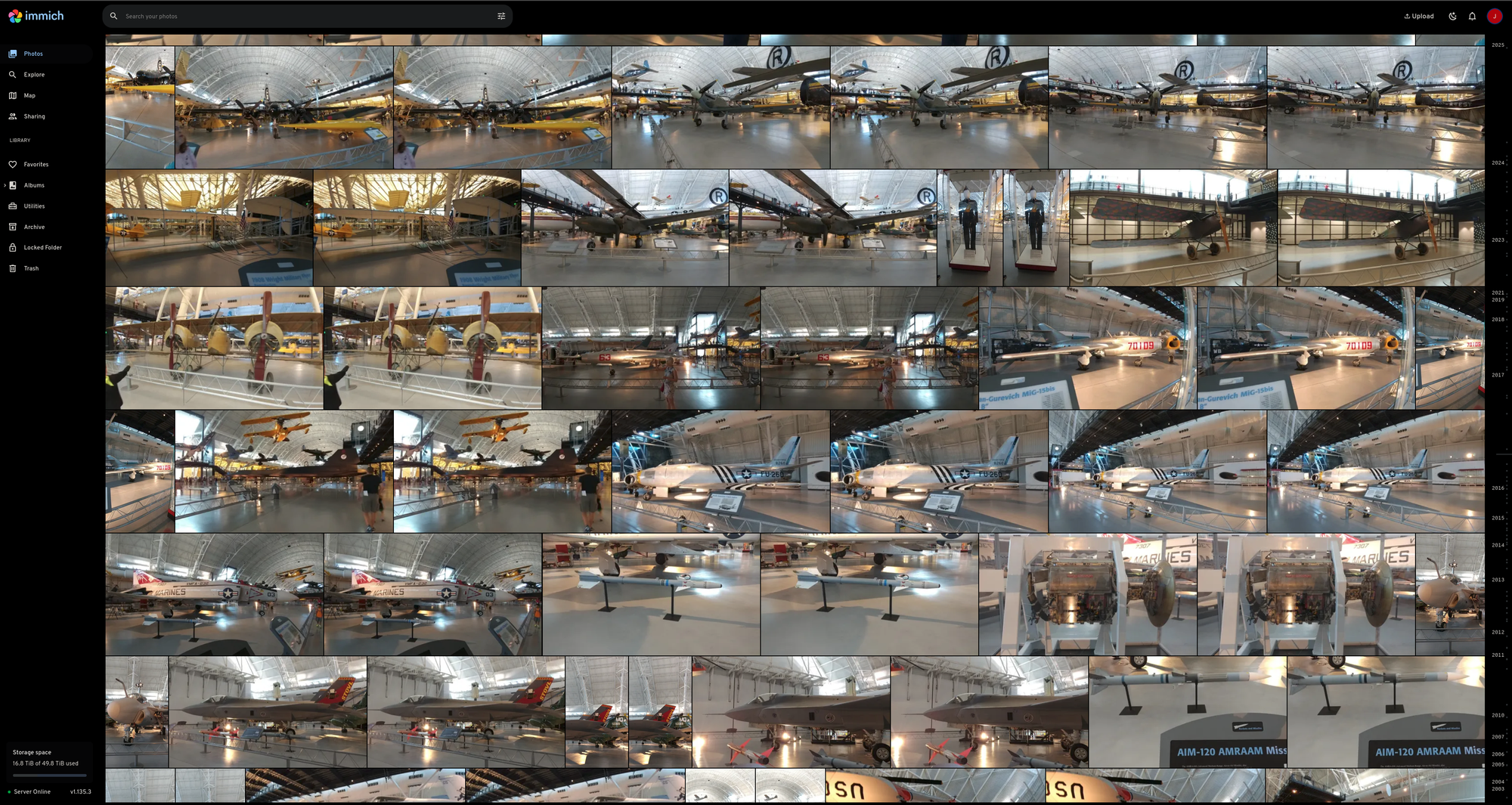
 Core Lab Joe
 Core Lab Joe