
Fighting the AI Slop: Year 1 Metrics, Costs, and Lessons Self-Hosting a Ghost Tech Blog

What started as a modest attempt to document, collate, and share the inner workings of my homelab has morphed into a furious, surprisingly addictive hobby.
I stopped spending as much time gaming, and put a ton of effort and time into blogging. In the year 2025... Kinda crazy when you consider what has been happening with:
The advent of AI & LLM slop obliterating content (Slopping) across wide swaths of the internet, crushing traditional human content under a weight of seemingless never-ending un-unique and sometimes blatantly wrong info! I received quite a lot of backlash just for using AI generated images & infographics from some, and others said who cares, if it speeds up your production time and you use it for graphics, meh.
As Core Lab wraps up its foundational first phase, I want to pull back the curtain for my fellow self-hosters and the Ghost CMS community. Here is the raw look at my metrics, my exact open-source tech stack, and what it actually costs to host a modern publication entirely under your own roof! Surprise - it's not "free" entirely, but aLOT cheaperthan renting a VPS or paying for a hosting provider, unless, you get a really good deal... But it is 100% private and maintains full data sovereignty.
The Launch Timeline: It Wasn’t Actually a Full Year
Year 1 started for me really, in late August / early September 2025, not January. I owned the domain as of April, was VERY busy with work & life and did not even start writing/publishing until August/Sept, and traffic did not start hitting until Nov/Dec 2025. So it wasn't actually a full year... It's Core Lab's first "year" - but 2026 will really be telling...
The first milestone represents a few months of very active momentum, development and dopamine hits for me! It makes the following numbers feel even more wild...
Content & Cadence: From Zero to Hyperdrive
I went from 0 posts, to 56+ or so. That was a lot! Some of them were almost rubbish when they came out, but some were gold... I refined and overhauled almost every page on the site, some extensively and multiple times, a near-constant rate of improvement & churn!
I originally planned a more conservative publishing rate:
- One technical deep-dive or architecture post per week and/or;
- A summary newsletter on Thurs/Friday if there's additional content worth delivering.
That plan quickly went out the window. The blogging bug bit hard, and at my peak, I was pushing out up to five high-quality posts in a single week.
Core Lab Key Traffic Metrics
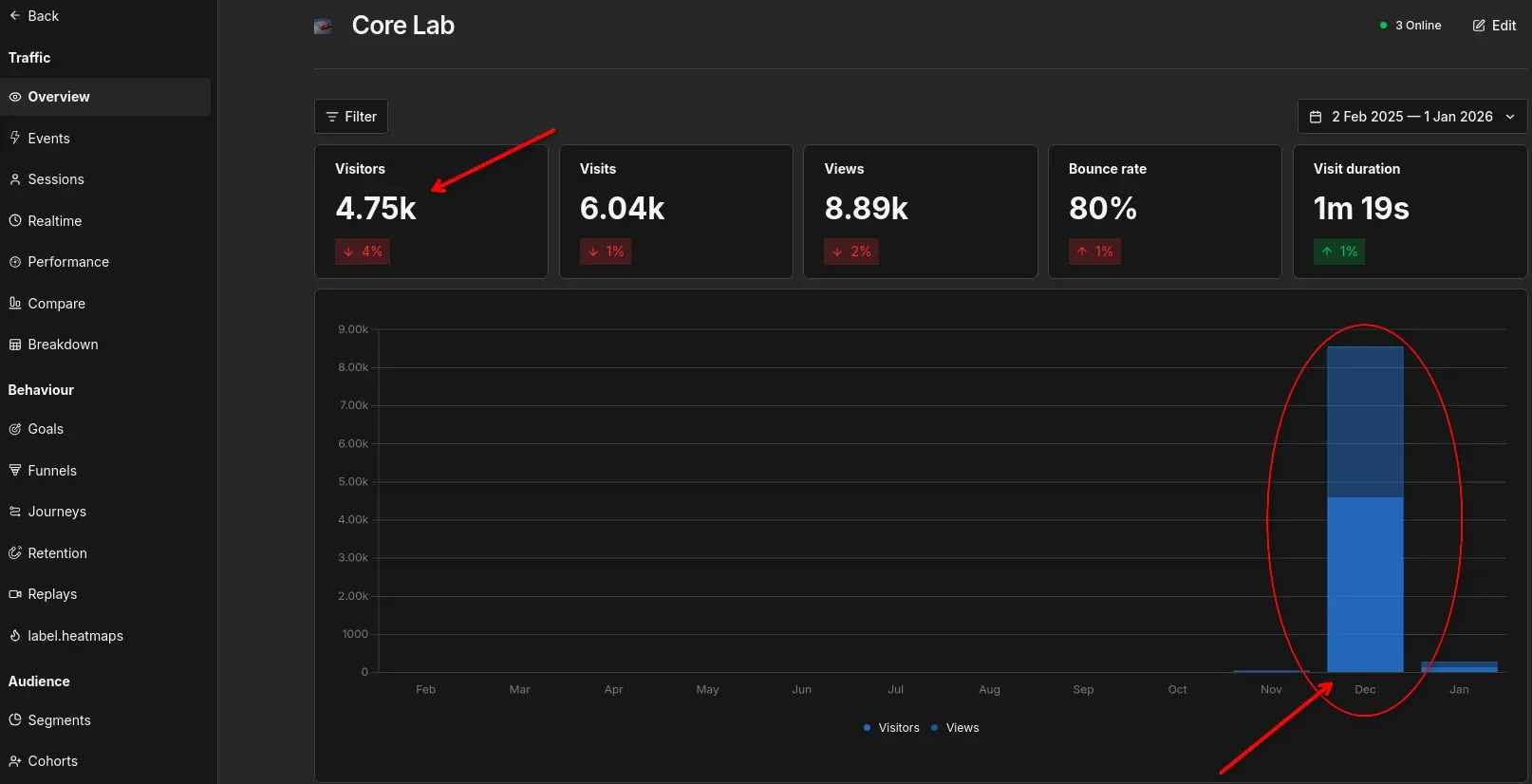
I dropped a few strategic posts on Reddit, hooked up my domain to Google Search Console, and watched the intake lines spike.
Core Lab 2025 Key Metrics
- Visitors: 4.75k
- Visits (some were repeat visitors): 6.04k
- Views (Each visitor viewed 'about' 2 pages / visit: 8.89k
- Bounce rate: 80%
- Visit Duration: 1m 19s
- Under 100 subscribers / members
As a new blogger, I didn't know much about these stats, or if they were 'good' or not so I googled my way to some other stats and chatted with some LLM's. For a brand new site, they were ok, nothing special, but not BAD - I was happy with this.
By January 2026, I had just under 100 signed up members. It's actually difficult to get that first 100, uphill battle for certain! My largest contributor to signups: People wanted to ask questions or leave comments! Hey at least they were reading it? Someone was 😉
Hopefully 2026 should show explosive growth overall, not unlike the 1980's/90's Kool-Aid man busting through a wall! It'll be a lot better than 1-2 months of stats that's for certain.
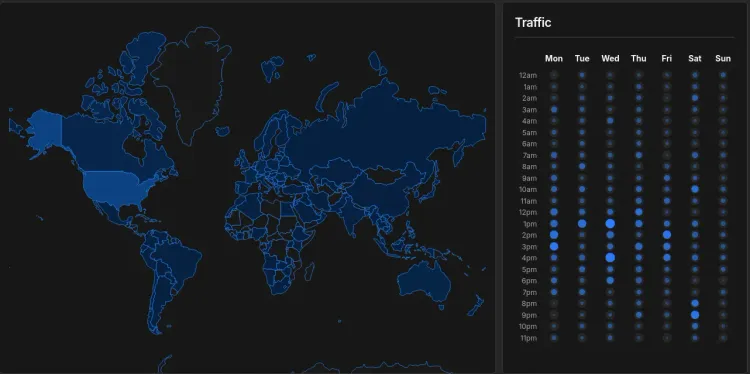
Geographic Breakdown: An Unexpected Global Footprint
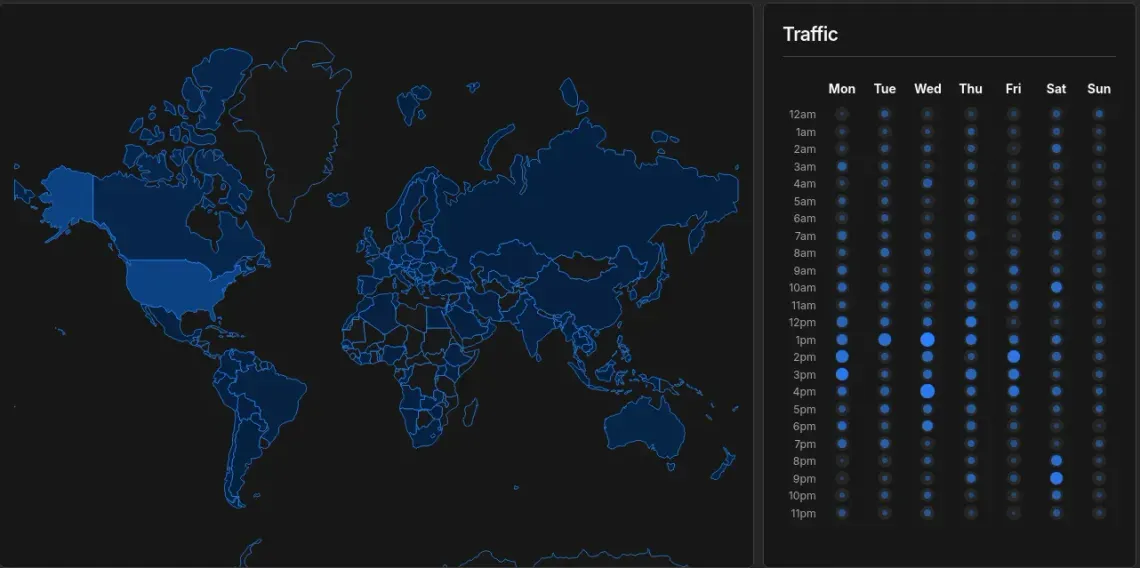
Interestingly enough, a large majority of my visitors were from the USA. I was a little surprised by this, and thought the Google algorithm would send more traffic from Canada, seeing as I am Canadian, this site is hosted in Canada and features some Canadian specific content. But from what I have learnt, it's whatever the people search for, is what drives the results Google feeds them. The web is very... "Democratic" in this way still, which is great.
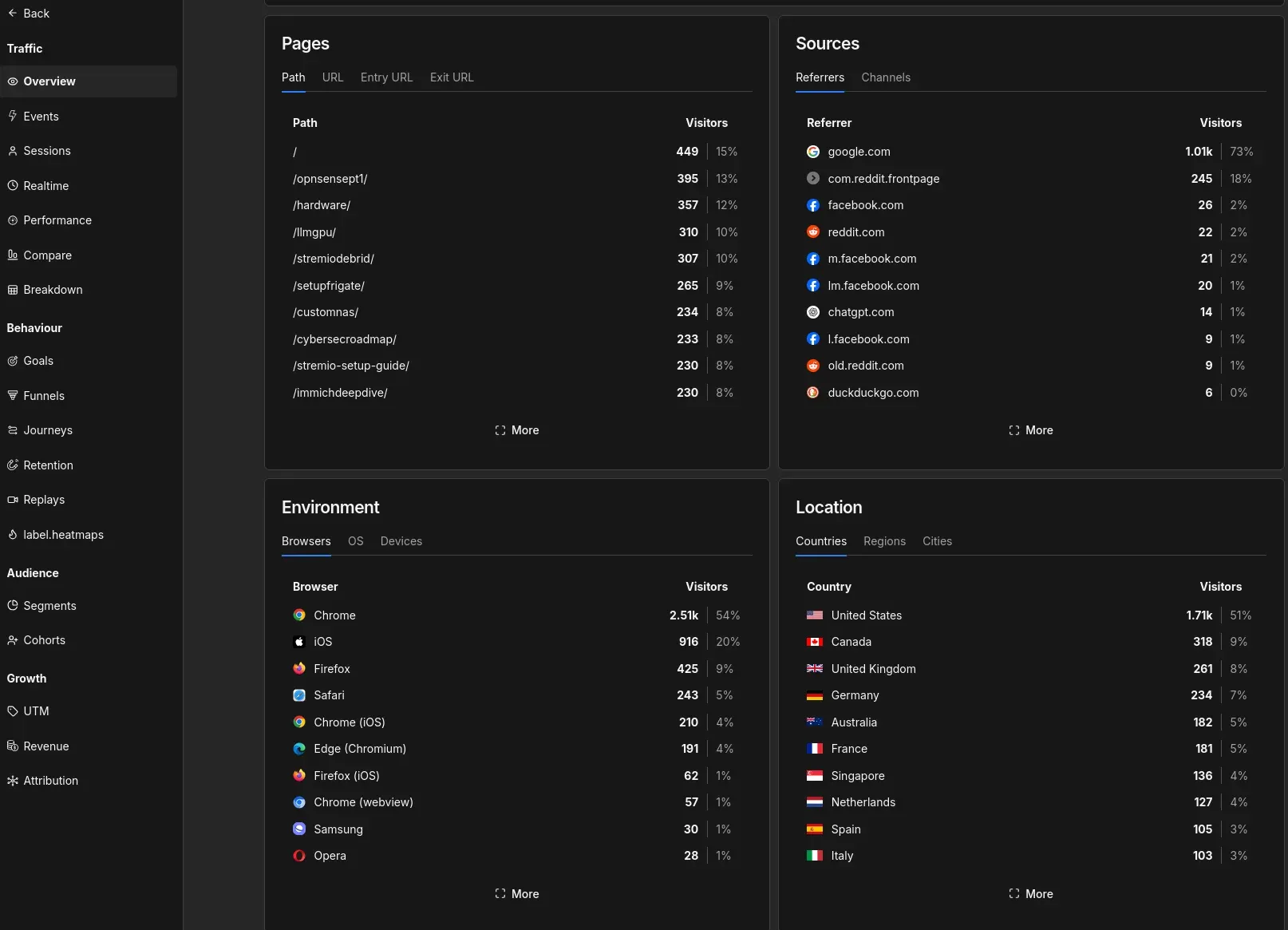
Beyond North America, I was thrilled to see a vibrant mix of European and global readers hitting the server daily!
Traffic Attribution: Where the Audience Comes From
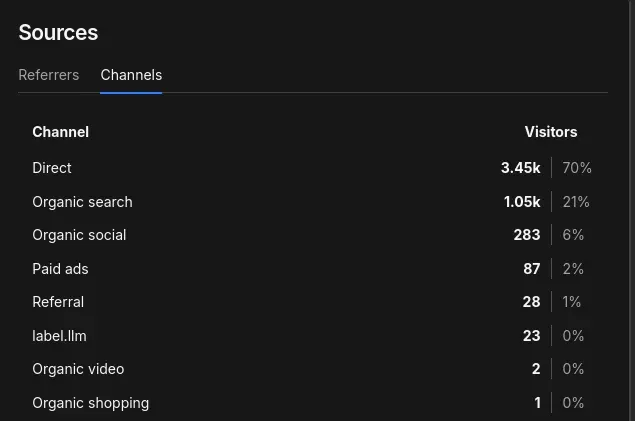
As you can see in the top right metric box - Sources, up above this pic, most of the traffic to the site was "organic search" - Google.
- Organic Search (Google/Bing): This was a massive win. I read endless horror stories about new sites sitting in the "Google Sandbox" for six months without getting indexed. Because the content focuses purely on unique, practical utility, the search spiders picked it up almost immediately.
- Organic Social (Reddit): This was my primary launchpad. Sharing targeted solutions directly into relevant homelab and self-hosting subreddits drove the initial waves of high-intent readers.
- Direct Traffic: A surprisingly high metric, though always a bit misleading. This accounts for readers bookmarking guides, typing the URL directly, or general attribution drops where tracking parameters fail.
- Referrals & Paid Ads: Referrals sat at a modest 1%, which is normal before a deep backlink profile develops. Paid ads sat at 0% because I don't buy ads - any tracking in this category usually stems from other operators sharing my links within their own ad-supported ecosystems.
I believe MOST of my traffic really came from Reddit, as that's the only place I shared other than a few links on Facebook.
The Backend Stack: How Core Lab Runs
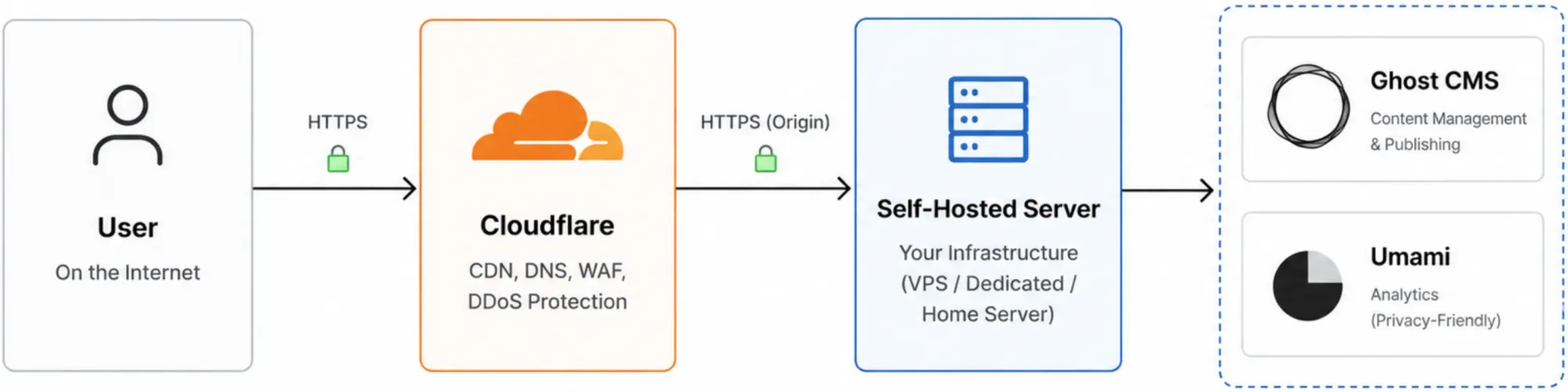
The CMS Platform: Ghost (Self-Hosted)
For the fellow web operators tracking the Ghost Blog tag, here is the exact infrastructure powering this entire site behind the curtain.
Core Lab's underlying tech stack is actually Ghost CMS & Newsletter. It's a fantastic all-in-one platform that helps you focus on delivering content vs fighting with the design, is modular with themes, and has builtin functions like newsletter signups / membership, free & pair tiers, stripe integration, mailgun & custom integrations. It's a fantastic API driven publishing platform and it's FREE! 100% self-hosted on my own server and FREE.
The Analytics Layer: Umami
The free tier of "Umami" metrics! So far it's been fantastic, I'm thinking about switching to a completely self-hosted tool called Rybbit however, sometime in 2026. The free tier of Umami only allows so much metrics before a paid subscription is allowed but it is a privacy first analytics tool, which is why I used it. That's fine, but I am trying to keep my overhead absolutely as low as possible while I self-host.
The True Cost of Self-Hosting a Publication
Everyone loves to say self-hosting is "free," but if you factor in bare-metal infrastructure and operational overhead, there is always a baseline ledger. I don't track every single micro-penny, but keeping my overhead rock-bottom is a core design principle of my lab. Overall it's not bad because I would already be running this infrastructure even if I did not host this website.
1. Hard Financial Outlays (Facts)
- Annual Domain Infrastructure (Renewal): $49.20 USD/yr (Cloudflare)
- Server Hardware: Again, not too bad because I am using a system I had already built, and would be running anyway, that said I replaced a drive in it already, but with yet another hand-me-down used drive.
- Upcoming Capital Upgrades: EVENTUALLY, I will be spending funds in late 2026 on new UPS & PSU.
- Roughly $200-$500 CAD / every 2 years, to try and maintain 99.9% uptime overall
- Would be nice if eventually, the site can support itself entirely for hardware costs.
2.The Smart-Power Calculation
I utilized some data modeling to project the exact electrical footprint of running this publication on a mix of consumer / Enterprise hardware. I'll be deploying a dedicated smart monitoring plug and writing a definitive guide on power usage / stats once I have some data (at least 3 months worth).
- Light estimate: $20/month
- Realistic: $25–30/month
- Heavy usage / inefficient PSU: $30–35/month
Electricity Estimate in Detail
The Sweet Spot: It costs roughly $25 to $30 CAD per month in power alone, to keep Core Lab live, secure, and processing background container workloads.
3.The Time Investment
Ah, let's not talk about this in detail... 👀 I have a problem, where this feeds my own ADHD and I can constantly keep tweaking the posts, pages, technical background operations etc... You can can take a guess, but I estimate OVERALL, I spend:
- no less than 10 hours a week on the site.
- Sometimes a lot MORE than that!
Looking Ahead
Ultimately, my goal is for Core Lab to help anyone learn, grow and achieve what they want in their own homelab, and it would be nice if eventually Core Lab became entirely self-sustaining, so it can fund its own enterprise hardware replacements over time.
Every single message, email, and comment thanking me for helping untangle a security policy or a Docker configuration acts as a massive source of motivation. I genuinely love helping people kickstart their self-hosting journeys, optimize their environments, and most importantly, secure their perimeters from the bad guys.
Thank you for an incredible first chapter! 2026 is going to be the real test - let's keep building.

Join the Core Lab Inner Circle!
Cybersecurity, Media Servers, Automation Oh my! Delivered directly to your inbox.
❓ Frequently Asked Questions (FAQ)
How much does it cost to self-host a blog like this?
Domain and infrastructure costs run about $49.20 USD/year (Cloudflare), plus roughly $20-35/month in electricity depending on usage, since the server runs 24/7 on existing hardware. Occasional capital upgrades (like a UPS or PSU refresh) add roughly $200-500 CAD every couple of years to maintain uptime.
Where does most of the traffic to a self-hosted blog come from?
For this blog, the overwhelming majority came from organic search (Google/Bing) rather than paid ads or social media. A few strategically shared Reddit posts, combined with getting indexed properly in Google Search Console, produced noticeable traffic spikes.
What analytics platform is used instead of Google Analytics?
Umami — a self-hosted, privacy-respecting analytics platform. It gives visitor, visit, and traffic-source metrics without sending reader data to a third party, which fits the same self-hosting philosophy as the rest of the stack.
How much time does it actually take to run a self-hosted tech blog?
Realistically, no less than 10 hours a week — sometimes significantly more — covering writing, editing, technical maintenance, and the kind of endless tweaking that's easy to fall into once you can touch every part of the stack yourself.
Is running your own Ghost CMS instance worth it instead of using Ghost(Pro)?
For someone who already has homelab infrastructure and enjoys the technical side, yes — it avoids a recurring hosting fee and gives full control over customization, code injection, and integrations. The tradeoff is you're responsible for uptime, backups, and maintenance yourself instead of a managed provider handling it.
Member discussion