Best Mini PCs for a Homelab (2026): Silent, Low-Power, Always-On Nodes
Below are the mini PCs I actually trust for always-on duty in 2026, sorted from affordable entry nodes up to the beefy "heavy scout" units that can hold their own as a primary server.
Best Mini PCs for Homelab Workloads (Low Power & Always-On)
Hardware has become extremely performant in the past 10 years, especially so for even smaller computers. So far I've played with a few different mini-pcs which are in different price ranges, and different architecture (Intel vs AMD, classic).
The "Twin Lake" N150's are newer and better than the legendary N100, offering higher clock speeds and better overall performance, though they share the same Quick Sync media engine for hardware transcoding as the N100, all the while still just sipping power.
Affordable Mini-PCs: Entry to Self-Hosting
The Mission: I would utilize these types of mini-PCs for "Always-On" critical infrastructure - services that must run 24/7 without spinning the power meter (Home Assistant, VaultWarden, Frigate etc). You can also use these to be the 'perfect' media player - forget transcoding, they can play almost anything!
We'll start with most affordable, and move down from there.
ABeelink EQR5 Mini PC, AMD Ryzen 5 5500U Mini PC - Great Mini Firewall or Server
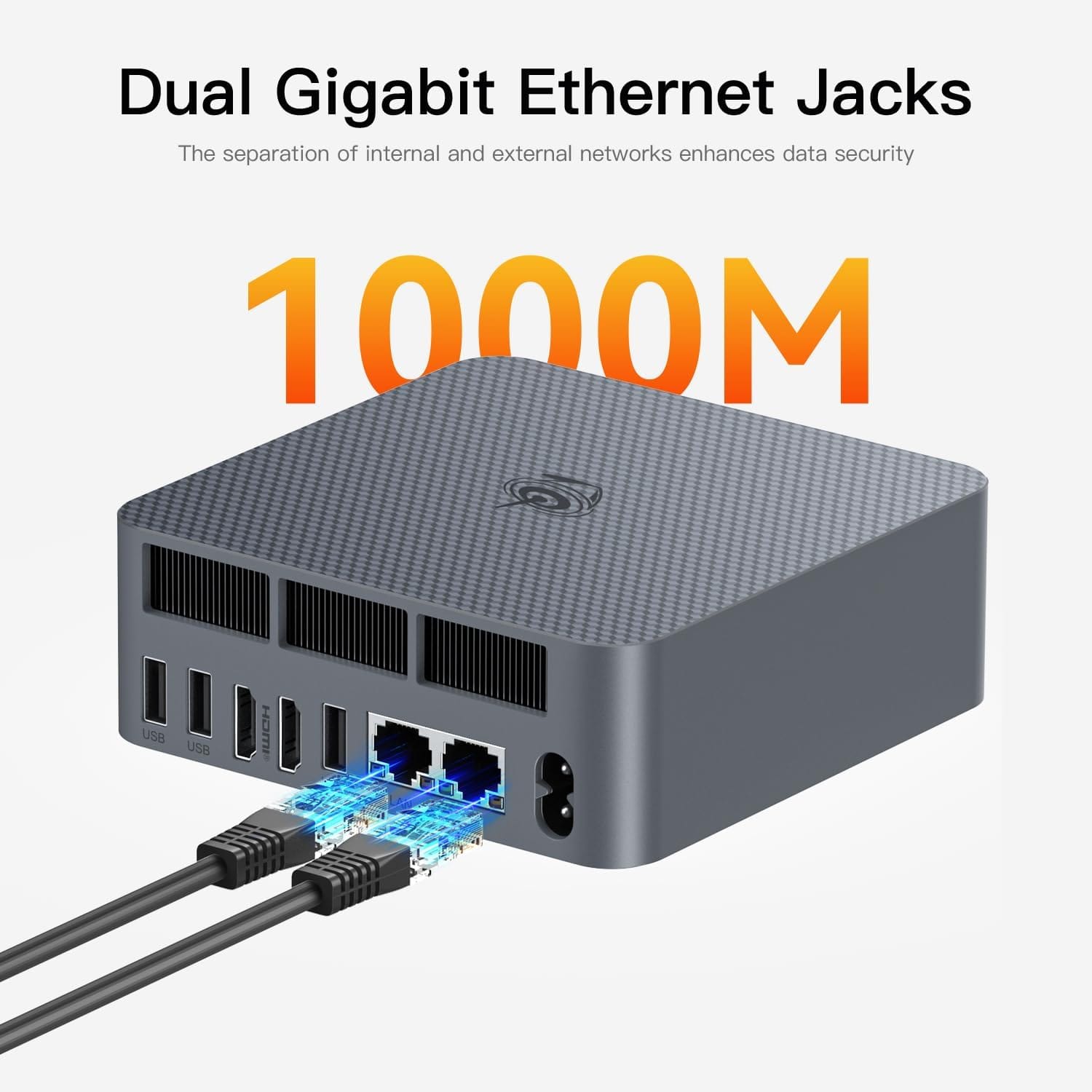
Beelink EQR5 Mini PC, AMD Ryzen 5 5500U!
- 6C/12T, up to 4Ghz
- 16GB DDR4 RAM
- 480GB SSD
- Dual 2X1Gbps Ethernet (Perfect for OPNsense!)
- LIFETIME Warranty support from Beelink!
There are 9 variations on the link, differing in RAM & storage and of course, price.
Capabilities:
- Tiny Powerful Footprint: For less that the cost of running a light bulb, this could run some serious dockers for you!
- Price ranges: for any budget (almost), massive bang for buck
- Limited Media Server ability: for that look down further 👇
Why I Chose It: At about half the cost of the GMKtec down below, this is the new cost efficiency champion.
KAMRUI Pinova P2 Small Gaming PC - Media Server & Player Master!
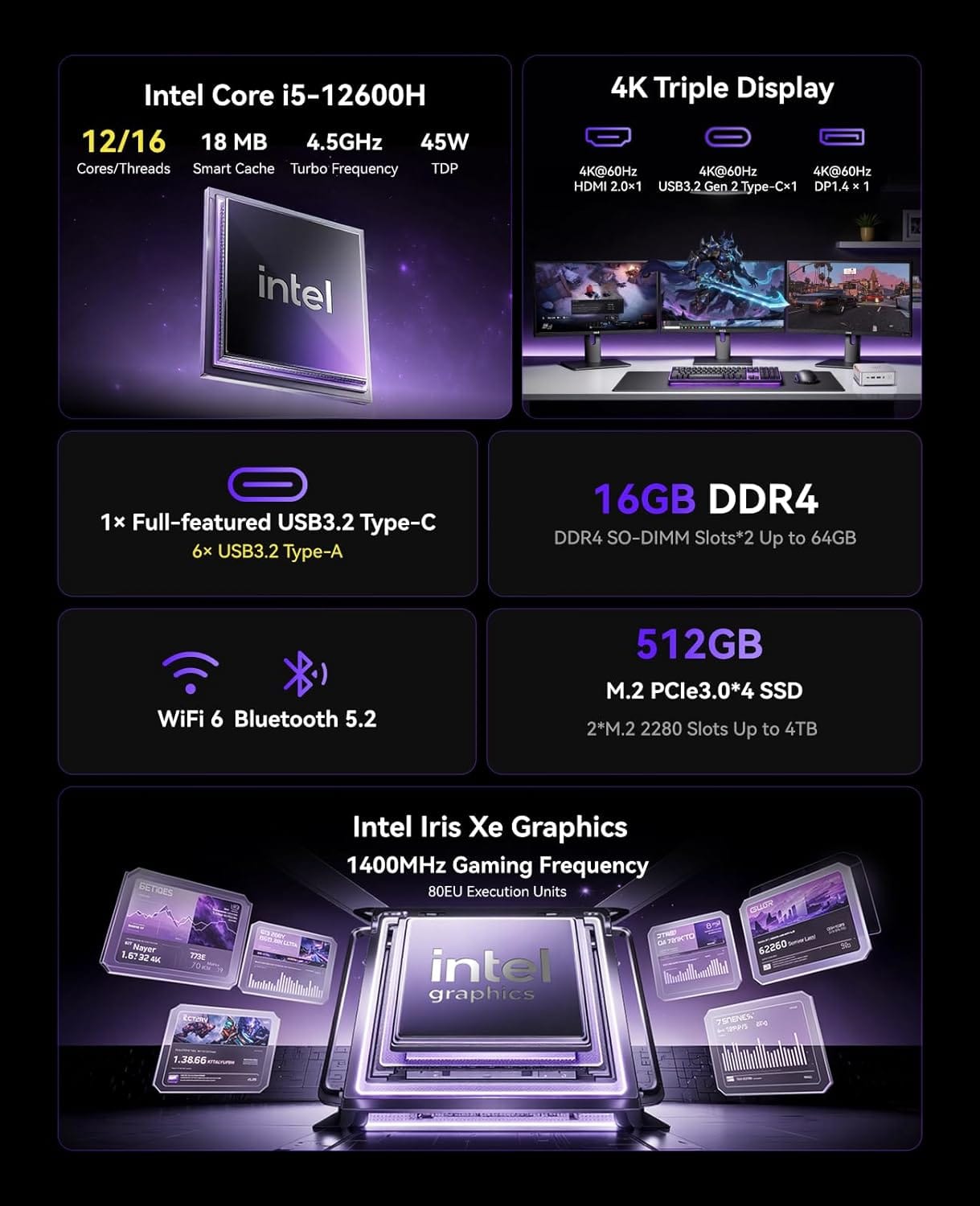
Intel Core i5-12600H
- Intel Core i5-12600H(Beats 1185G7/12450H)
- 16GB DDR4 RAM
- 512GB SSD
- 1X1Gbps RJ45 Ethernet
- 45 Watts running power!
There are 10 variations on the link, differing in RAM, storage and price.
Capabilities:
- Transcoding King🔥: Unlike the Ryzen, this features Intel Iris XE which is like Intel QuickSync. It can transcode multiple 4K streams while using less power than some lightbulbs! She bangs!!!
- Can use this as a Plex or Jellyfin server
- Sweet spot as a media server for cost / ability.
The "Max Flex" Tiny HomeLab Mini-PC Server
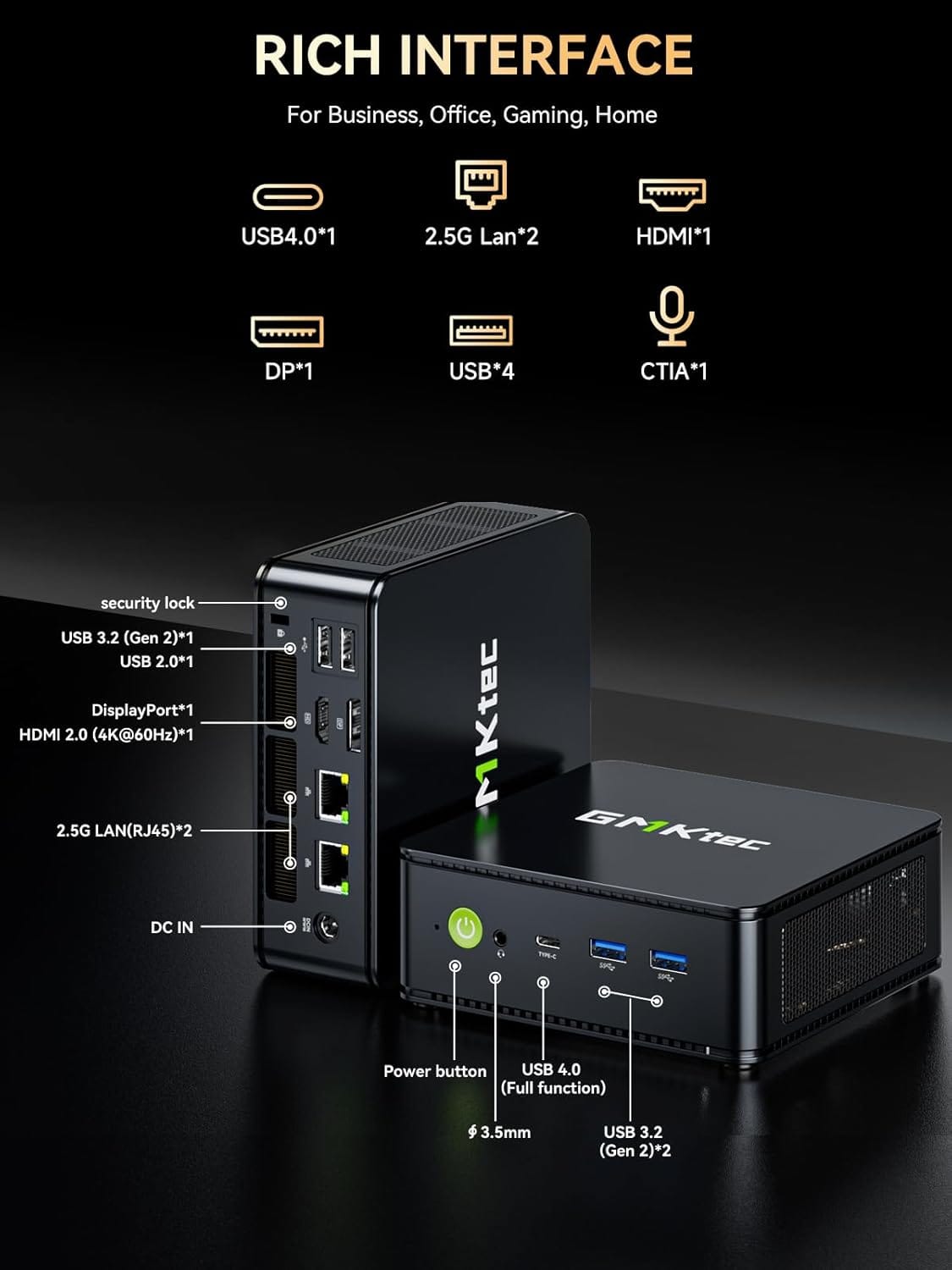
GMKtec M6 Ultra Gaming Mini PC
- Ryzen 7640HS 6C/12T 4.3Ghz CPU
- Dual NIC LAN 2.5GbE
- 32GB LPDDR5 RAM
- 45 Watts on avg, max 60!
There are 4+ variations on the link, differing in RAM, storage & price.
Why I Chose It: For 90% of homelab tasks, it is more than enough. It represents the perfect entry point for a Digital Fortress: cheap, reliable, and invisible. Flexible enough to fit basically any scenario. You'll be hard pressed to find something else at this price point, as capable.
Capabilities:
- Powerful: enough to be a Proxmox cluster node, or an OPNsense firewall with advanced features enabled, it's a "do anything" box at a (relatively) affordable price.
- Connectivity: Equipped with Dual 2.5GbE LAN allowing maximum deployment scenarios!
- Upgradable RAM & storage.
Medium Rangers: Middle in terms of price, incredible in terms of performance
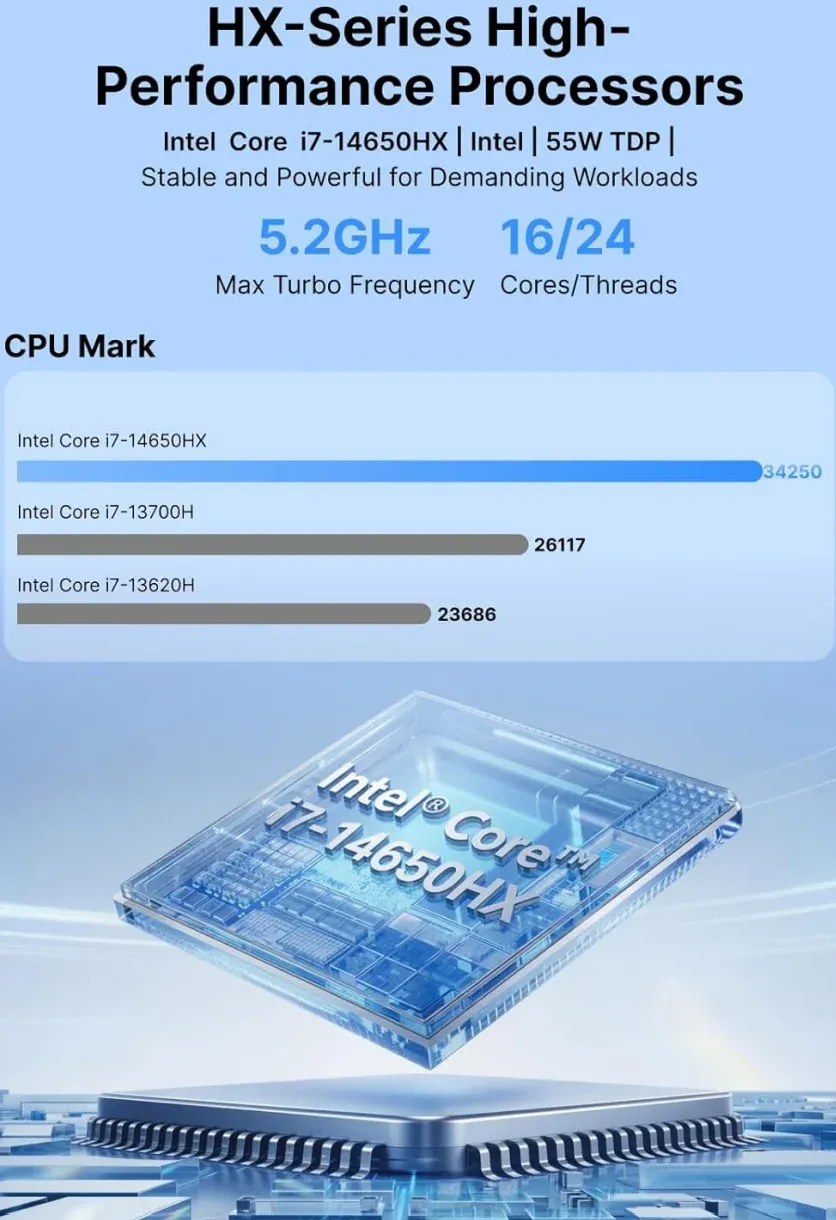
ACEMAGIC M5 Mini PC
- Core i7-14650HX (16 cores / 24 threads)
- 32GB DDR4
- 1TB SSD
- NVMe PCIe4.0/USB3.2/Type-C/BT5.2/WiFi6
- Using only 55 Watts
Why I Chose It: This is a massive step up from the choices above, but still half the cost of the heavy-scouts below. At 32GB DDR4 RAM, you can do anything with it. For homelab server tasks, you don't actually need (or benefit) from expensive DD5 ram. Here's where you save money using last year's tech, which will carry you forward for many years.
There's also a much cheaper 16GB RAM / 512GB NVME version too!
Capabilities:
- Powerful & Robust features: It can likely do just about anything you throw at it. 30 dockers? Sure. Proxmox and half a dozen VMs? Sure. Mini-travel gaming PC to take with you? Absolutely!
- Transcoding Power: It is a beast for transcoding. It can easily handle 8+ simultaneous 4K HDR to 1080p transcodes in Plex or Jellyfin.
- Codec Support: It supports hardware decoding for almost everything, including HEVC (H.265) 10-bit and VP9. However, unlike the newer Core Ultra (Lunar Lake) or Arc chips, this specific UHD graphics version does not support AV1 hardware encoding, though it does support AV1 decoding.
- The Trade-off: This is a 55W TDP chip that can burst over 150W. In a Mini PC form factor, this means significantly higher power consumption at idle and louder fan noise compared to the 6W N100/N150. Overall this unit is better for gaming, or being a general server than streaming media server. But this isenergyefficient virtualization.
- Connectivity: Equipped with only 1X1Gbps NIC, this is it's only downfall.
- EASILY mitigated with a USB3.0 2.5Gbps NIC!
- Upgradable RAM & storage.
If you must have DDR5 though, here's a great option!
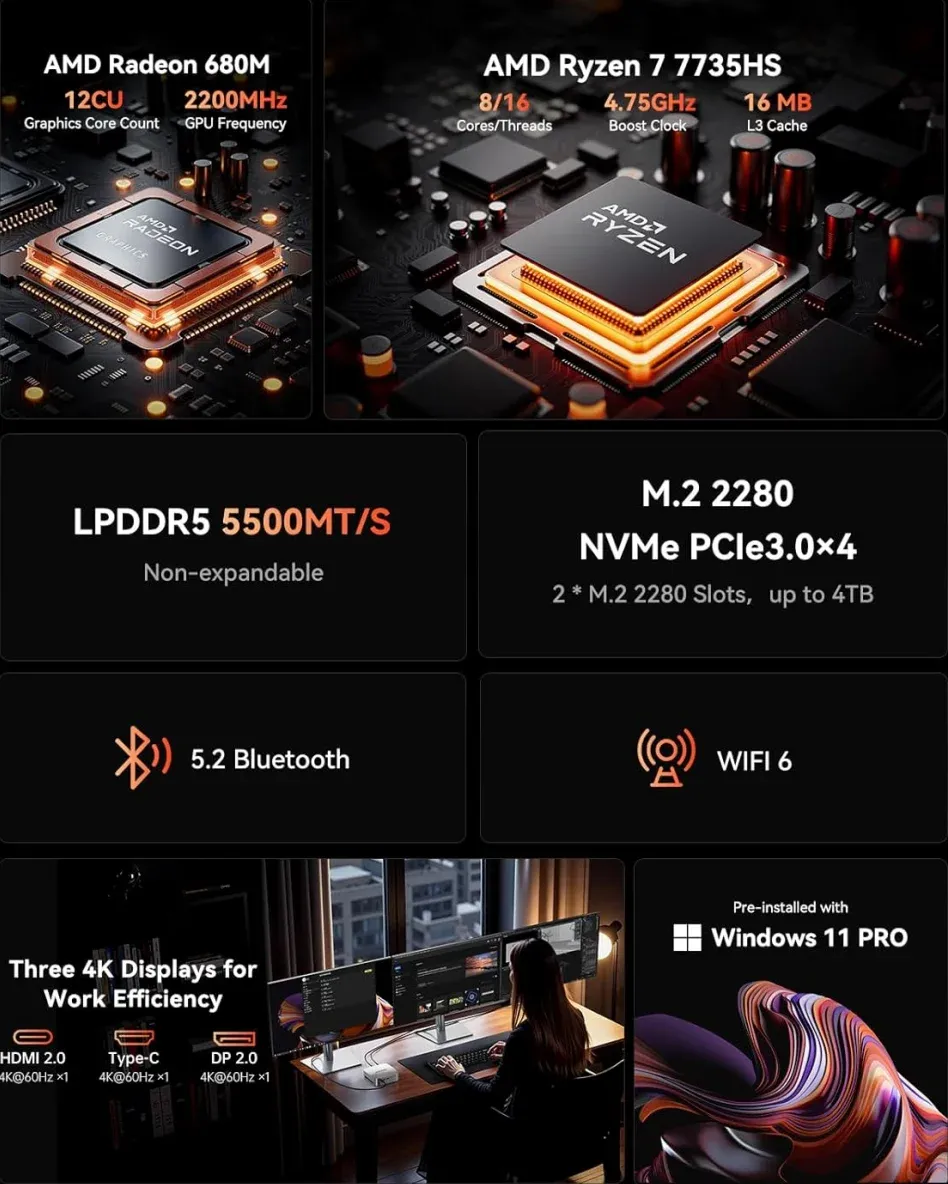
ACEMAGICIAN M1 Mini PC
AMD Ryzen 7 7735HS 24GB LPDDR5 512GB PCle SSD Mini Computers(8C/16T, up to 4.75GHz) Radeon 680M
Why I Chose It: Latest & greatest tech (Both CPU & RAM). At 24GB DDR5 RAM, you can do anything with it.
Capabilities:
- Powerful & Robust features: As it's cousin above, it can basically do anything.
- The 7735HS is an 8-core/16-thread powerhouse. If hardware transcoding fails, it has enough raw CPU "grunt" to handle several 1080p transcodes via software (CPU) alone.
- 4K Capability: The Radeon 680M can handle multiple 4K HDR to 1080p transcodes effectively if you are using Jellyfin or a properly configured Plex instance.
- Connectivity: A step up from above, this unit has 1X2.5Gbps NIC.
- EASILY mitigated with a USB3.0 2.5Gbps NIC!
The Heavy Scouts: Beefy Mini-PCs (Not cheap!)
These are more or less, full on modern desktop / workstation replacements, in tiny form factors!
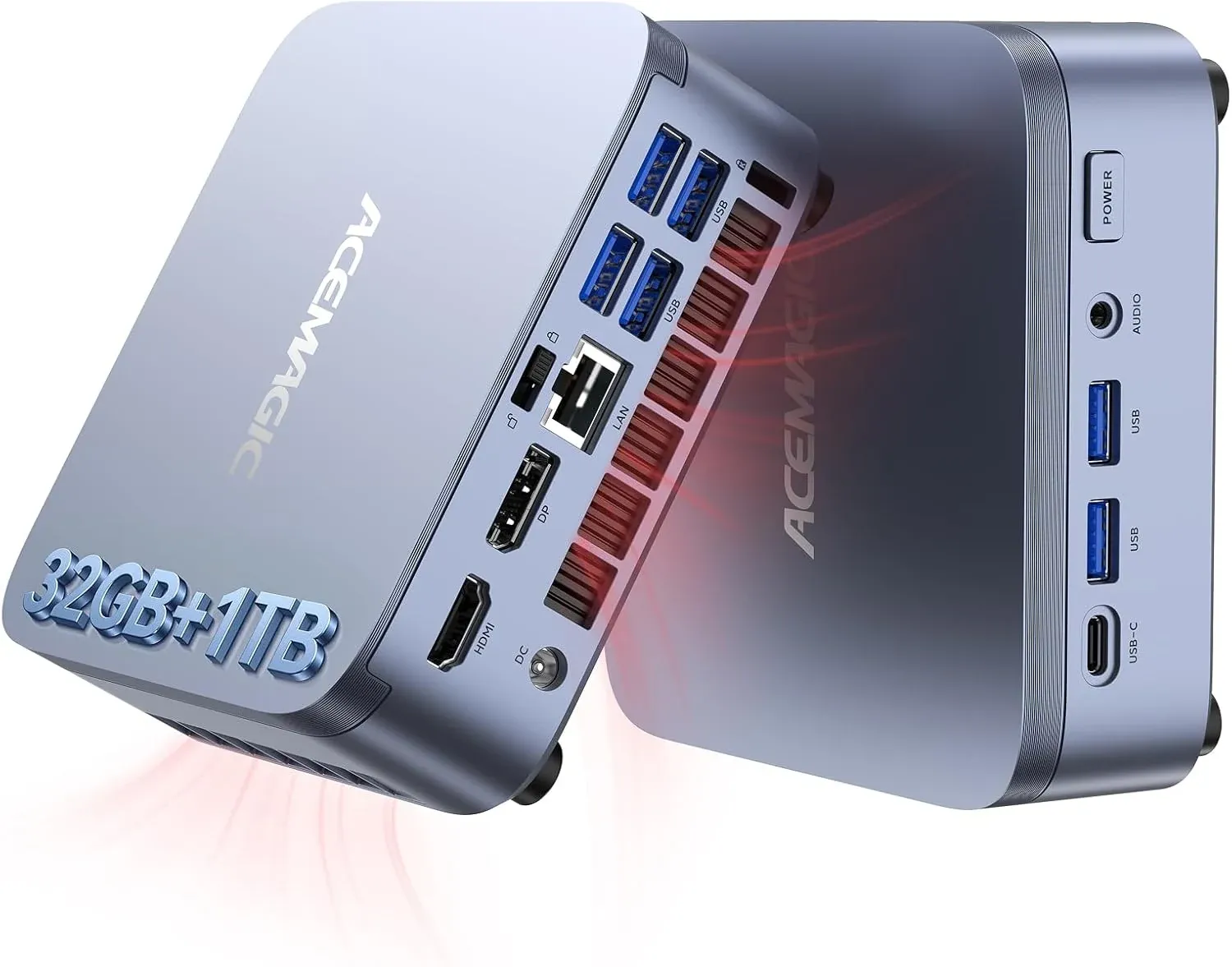
ACEMAGIC M5 Mini PC Windows 11 Pro
- Intel Core 14500HX
- 32GB DDR4
- 1TB SSD
- NVMe PCIe4.0/USB3.2/Type-C/BT5.2/WiFi6
At just 55 watts, this ACEMAGIC Mini PC is ridiculously "overpowered". Maximum bang for buck / deal!
The Mission: Anything. This is easily powerful enough to run as your virtualization home.
Capabilities:
- Virtualization: With 32GB DDR4, this is a perfect Proxmox or LXC/Container host (14/20 Cores, WTF?!) as well.
Last but not least... GMKtec Mini PC M7 PRO
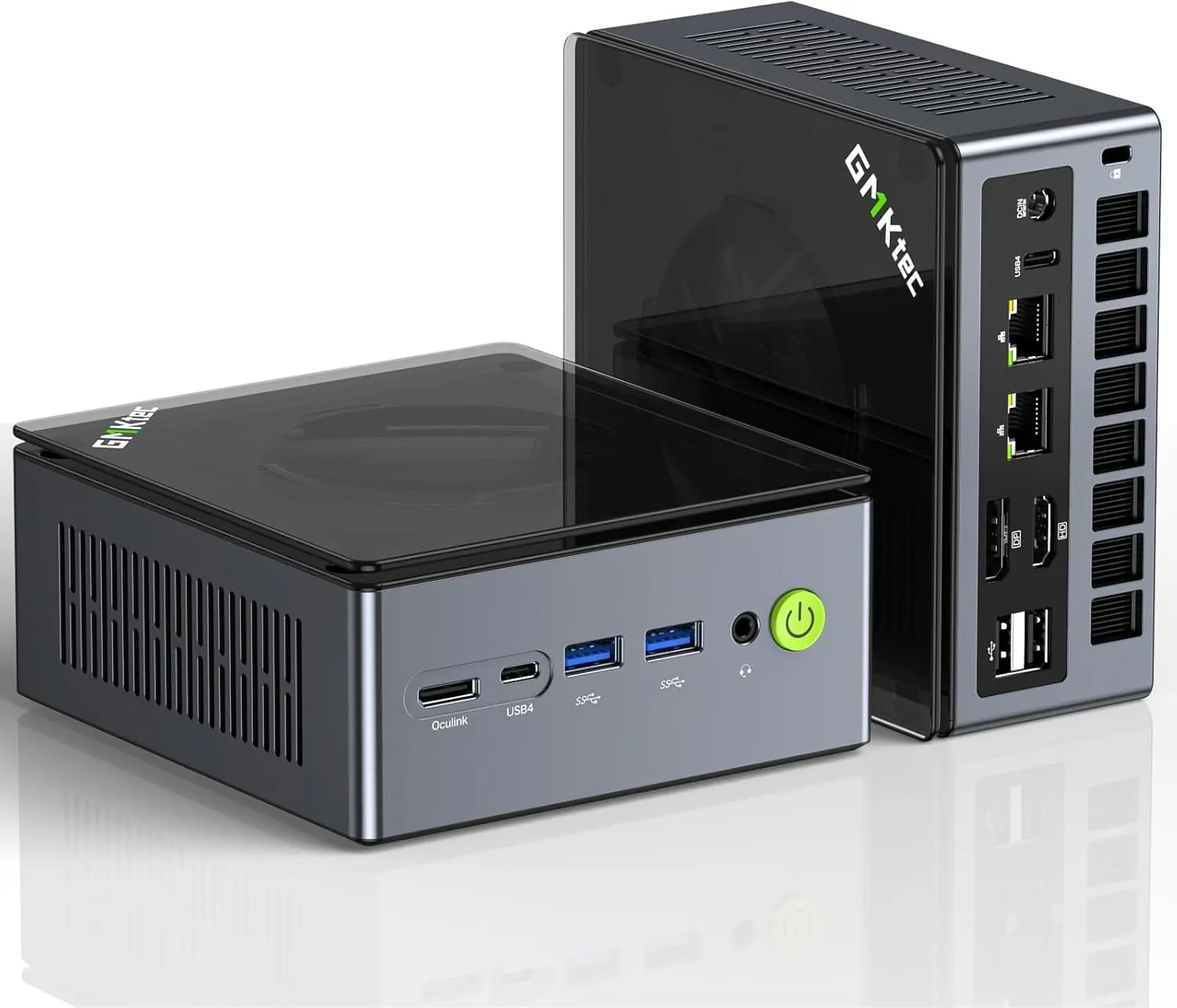
Dual NIC LAN 2.5G Desktop Computer, 32GB DDR5 RAM + 512GB Hard Drive PCle SSD, Dual USB4, HDMI 2.1, USB-C
The Mission: I deployed this unit to replace my aging, power-hungry OPNsense tower. At the time I purchased it, it was actually on sale and about $500 Canadian. Sadly, the current version is more than double this cost...
Why I Chose It: Some might call a Ryzen 7 "overkill" for a firewall, but I disagree. This is basically a "mobile" chip which sips power. When you are running Zenarmor (Next-Gen Webfilter) and performing deep packet inspection at gigabit speeds, you need raw horsepower. This unit handles my entire network security stack without breaking a sweat, all while drawing a fraction of the power of my old desktop.
Capabilities:
- Virtualization: With 32GB DDR5, this is a perfect Proxmox or LXC/Container host (8 cores / 16 threads) as well.
- Expansion: It features Ocu-link, meaning you can attach an external GPU later if you want to turn this into a dedicated AI node or gaming rig. Basically it's got limitless flexibility.
Localized AI / LLM in a "Mini-PC"
GMKtec EVO-X2 Strix Halo (The Local LLM Monster)
This one is for the AI-curious crowd looking to break away from cloud API subscriptions. Warning: Expect some sticker shock here.
The standout feature is the massive 96GB to 128GB of unified memory shared directly between the CPU and the integrated Radeon 890M GPU. Because VRAM capacity is the ultimate bottleneck when running large language models locally, this unified architecture allows you to run massive 70B+ parameter models locally. To achieve that on a desktop, you would need a multi-discrete GPU setup costing two to three times as much.
- Specs: Ryzen AI Max+ 395 (Strix Halo) | Up to 128GB Unified RAM | Radeon 890M Graphics
- Best For: Local AI development, offline LLM inference, and heavy graphic/compute compute compilation.
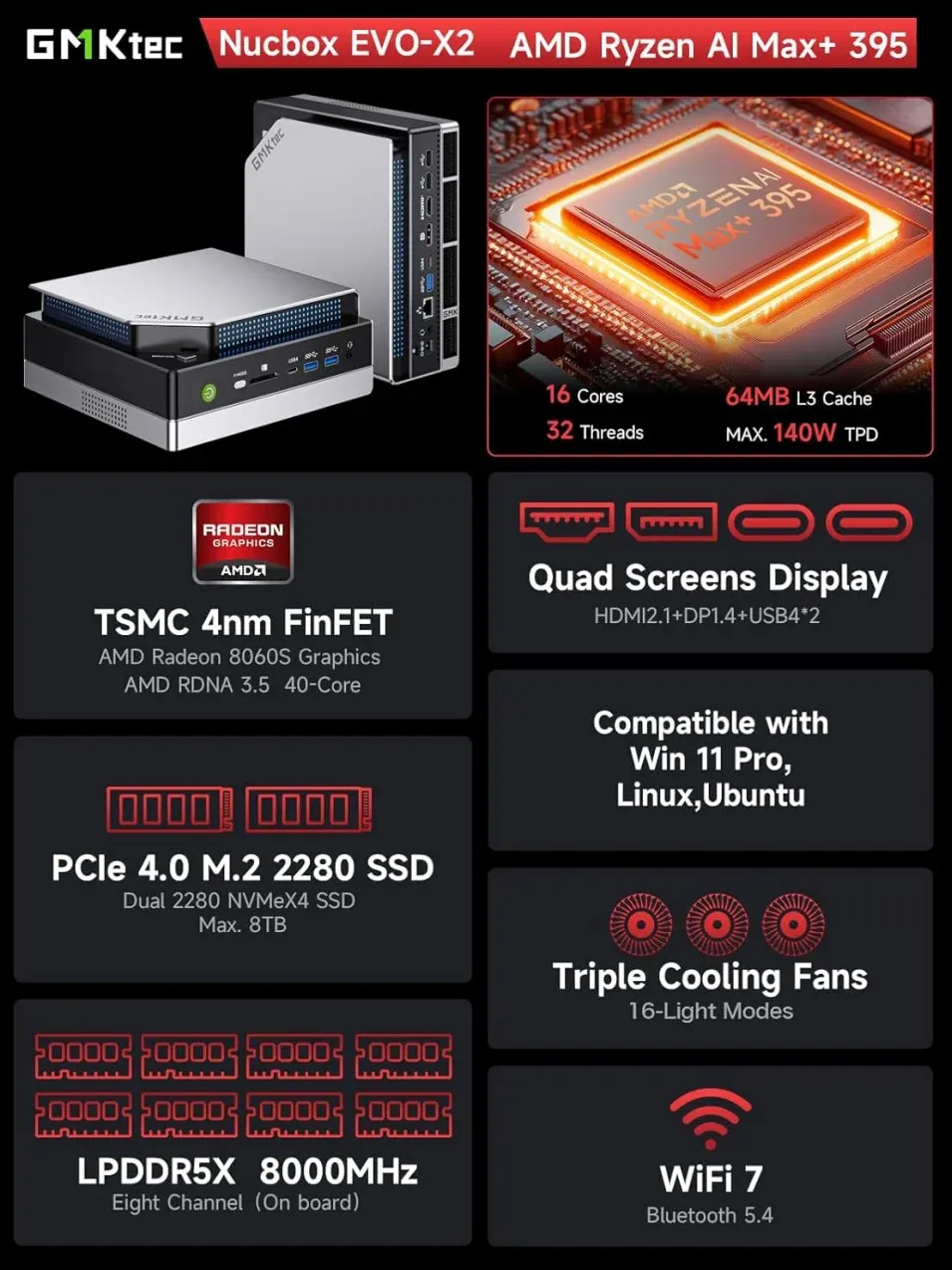
GMKtec EVO-X2 AI Mini PC Ryzen Al Max+ 395
- EVOLUTION RYZEN AI MAX+ 395 MINI PC - GMKtec EVO-X2 is the next evolution in AI mini PC Ryzen Strix Halo series. Thanks to AMD Simultaneous Multithreading (SMT) the core-count is effectively doubled, to 32 threads. Ryzen AI Max+ 395 has 64 MB of L3 cache and can boost up to 5.1 GHz, depending on the workload. The Ryzen AI Max+ 395 is currently rated as the "most powerful x86 APU" on the market for AI computing.
- AI NPU with XDNA 2 ARCHITECTURE - Powered by 16 “Zen 5” CPU cores, 50+ peak AI TOPS XDNA 2 NPU and a truly massive integrated GPU driven by 40 AMD RDNA 3.5 CUs, the Ryzen AI MAX+ 395 is a transformative upgrade and delivers a significant performance boost over the competition. The Ryzen AI Max+ 395 excels in consumer AI workloads like the llama.cpp-powered application: LM Studio. Shaping up to be the must-have app for client LLM workloads, LM Studio allows users to locally run the latest language model without any technical knowledge required and unleash their creativity and productivity.
- AMD RADEON 8090S iGPU GAMING PC - The AMD Radeon RX 8060S offers all 40 CUs with up to 2.9 GHz graphics clock and uses the new RDNA 3.5 architecture. The powerful iGPU is positioned between an RTX 4060 and 4070 laptop GPU and therefore enables gaming in FHD at maximum details in most demanding games. The 8060S can also utilize the full 128GB pool, which is perfect for running LLMs such as Deepseek 70B Q8, which runs comfortably on this machine.
- EIGHT CHANNEL LPDDR5X - LPDDR5X is a new ground breaking memory small form factor installed on-board. With blazing speeds up to to 8000MT/s, it runs 1.5x faster than the DDR5 SODIMMs; 90% better performance over DDR5 SODIMMs in video conferencing and photo editing; 30% better performance in productivity apps; 12% better performance in digital content workloads.
Keep Building the Fortress
This guide is one wing of the larger Homelab Hardware Guide. Continue your build with these companion resources:
Homelab Hardware Guides
The Complete Guide · Start Here
Best Homelab Hardware Guide (2026)
The Gatehouse (This post)
Best Mini PCs for a Homelab
The Engine
Best Homelab Server CPUs: Intel vs AMD
The Vault
Best Pre-Built NAS for a Homelab
The Ammo
Best NAS & Homelab Hard Drives
The Uplink
Homelab Networking Gear Blueprint
The Supply Line
Where to Buy Homelab Hardware in Canada
Frequently Asked Questions
Is a mini PC or a NAS better for a homelab?
They solve different jobs. A mini PC is a compute node for running Docker containers, a firewall, or light VMs, while a NAS is built for bulk storage. Many homelabs run both: a mini PC for always-on services and a NAS for media.
How much RAM does a homelab mini PC need?
16GB is a comfortable baseline for a handful of Docker containers and light services. Step up to 32GB if you plan to run several VMs, a Plex or Jellyfin server, or memory-hungry apps like databases.
Can a mini PC run Plex or Jellyfin?
Yes. Any mini PC with an Intel CPU that includes Quick Sync (11th gen or newer) handles hardware transcoding for multiple 4K streams while sipping power, which makes it an excellent low-power media server.
Are mini PCs reliable for 24/7 use?
Modern mini PCs are designed for always-on operation. Stick to units with adequate cooling and, where possible, dual NICs and NVMe storage for the best longevity in a homelab.
Member discussion